Tag Archives: 21st century literacy

Creating Interactive Content

I recently learned about a useful digital technology app I am sure I will be using this upcoming school year. Riddle is an app which let’s you easily and quickly create:

  • opinion polls
  • lists
  • quizzes
  • personality tests
  • commenticles (commenting on articles)

Riddle allows you to customize your content by adding images,YouTube videos, animated gifs, articles from the web, personal photos, etc. Once your interactive social content (opinion poll, list, quiz, test, commenticle) is created, there are several ways to share it. You can embed the content into your own blog or website. Or you could e-mail the link out to your class. You can also share your created content through Facebook or Twitter.

I spent 30 minutes playing around on this site and came up with so many great ideas on how to use it in my classroom. Using the opinion polls, I will create an ice-breaker activity and e-mail it out to my class and show the results on the first day of class. Also, if I want my class to discuss an article, I will use the commenticle feature. Below is a commenticle I made on Riddle:

Screen Shot 2015-08-18 at 11.39.34 AM

To learn more about RIddle and make your own interactive content this school year, check out the link:

http://www.riddle.com/

Lens Blog and Visual Thinking Strategies

When developing the photo essay assignment for my course, I came across an excellent resource for teachers and students. The New York Times has started a blog entitled Lens: Photography, Video, and Visual Journalism. The topics covered in  the blog posts touch on several critical issues such as immigration, race, and class. The photos  captured in each of the photo essays serve as a great entry point into rich discussion. When using the Lens Blog in my classroom I find myself drawing on skills I developed during workshops many years ago.

When I was a public school teacher, I participated in a fascinating series of professional development workshops called Visual Thinking Strategies (VTS). By analyzing carefully selected images, students were able to develop critical literacy skills as well as visual literacy skills. Teachers were facilitators in this process and asked three open-ended questions:

1. What’s going on in this picture?

2. What do you see that makes you say that?

3. What more can we find?

I found myself using the VTS approach when presenting students the photo essays from the Lens blog. Students in my class really engaged with the photos and rich discussion took place as a result. I will definitely be using this blog for years to come in the classroom.

Below are some powerful images from photo essays on  the Lens Blog.

Photo Essay: Garifuna Immigrants in New York
Photo Essay: Connecting with Syrian Refugees
Photo Essay: One Year Later, Remembering Eric Garner

Link to VTS site: http://www.vtshome.org/

Link to NYT Lens: http://lens.blogs.nytimes.com/

The Power of Photo Essays

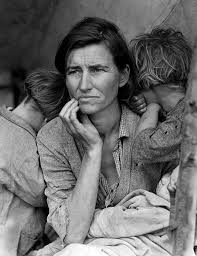
I have just started teaching a unit on media, specifically social documentaries. So far we have studied the important work of American photographer Dorothea Lange related to the rise and significance of “concerned photography” (also known as “compassionate photography”). Students have engaged deeply with the photos and answered questions adapted from New York Times Critical Lenses guide such:

  • What feelings does this photograph create for you, the viewer?
  • How personal/impersonal is this photo? What elements make it this way?
  • Why do you think this photograph was taken?
  • Is this photo timely? Does it have a timeless quality? Why or why not?

Photos of Lange’s we analyzed in class:

Migrant Mother, Photographed By: Dorothea Lange
Richmond, CA Photographed By: Dorothea Lange

Beyond studying the background of photo journalism, students will learn  the basic principles of photography (e.g., rule of thirds, movement, lines, etc.). Following this, students will have the opportunity to create their own social documentary in the form of a photo essay. Students are still thinking through topics, but they are to tell an “untold story” from their lives. Topics which we have brainstormed so far have included: The shifting landscape of the Regent Park neighbourhood in Toronto, Canada; Cultural traditions of the First Nations people in Ontario, Canada; and A Day in the Life of the Pan Am Games 2015.

I am looking forward to seeing what stories students decide to tell. I will keep you posted on the process! I am learning so much along with my students!

Fuji Kindergarten

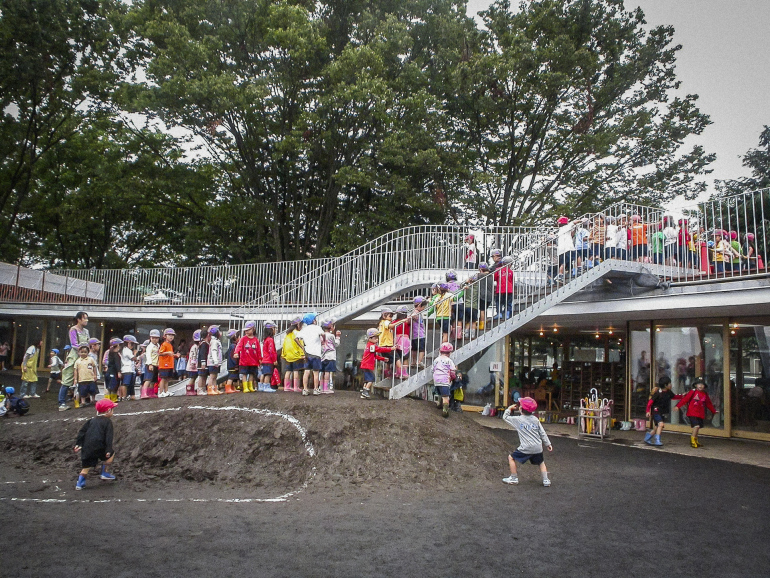
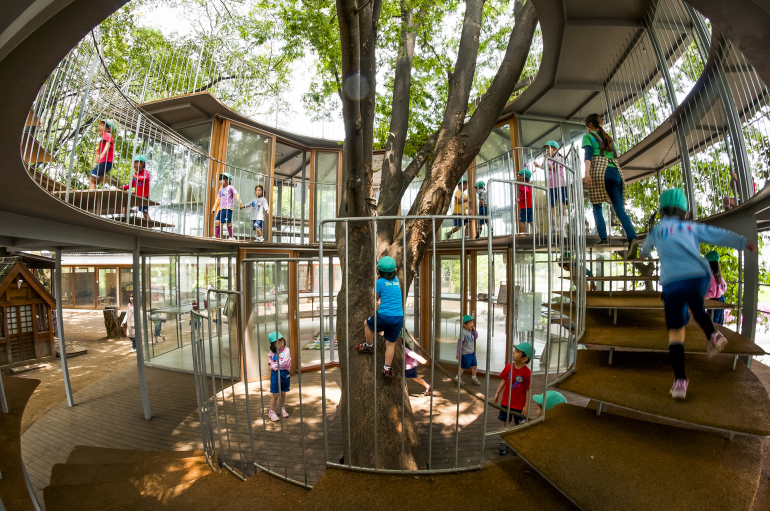
Takaharu Tezuka is the architect behind Fuji Kindergarten, deemed by some as the best Kindergarten in the world. Tezuka followed around his own young children to inform his school design. He designed a school which encourages pupils to move, play, dream, imagine, and grow.

Thu-Hoang Ha, author from Ideas.Ted.Com describe the schools’ most notable features:

  1. Circular playground lets the kids run forever

“We designed the school as a circle, with a kind of endless circulation. When we started, I had no preconceived notions. Studying other kindergartens was like looking in the rearview mirror of a car: Even if you look very closely, you can’t see anything in front.”

fujicircle

  1. Pupils can slide to class

slide to class

  1. Pupils can climb to class

climb to class

  1. Intentional Distractions

“The kids love to look through the skylights from the roof. ‘Where’s my friend?’ ‘What’s going on underneath in class?’ And when you look down, you always see kids looking up from below. Here, distraction is supposed to happen. There are no walls between classrooms, so noise floats freely from one class to the other, and from outside to inside. We consider noise very important. When you put children in a quiet box, some of them get really nervous.”

11

Read more here: http://ideas.ted.com/inside-the-worlds-best-kindergarten/

Watch a video on the Fuji School here: https://www.youtube.com/watch?v=Rd7mR3lb3yg

Creating “Legible” Cities

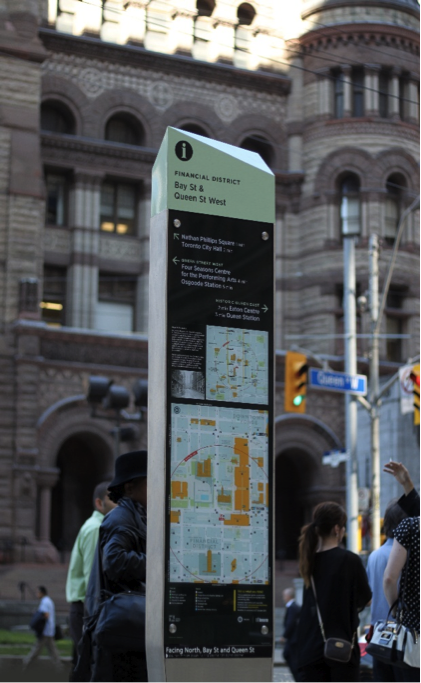
In preparing for the 2015 PanAm games, Toronto is installing new signage to make the city an easier place to navigate. A wayfinding approach is being used which is defined on Wikipedia as: “ the ways in which people and animals orient themselves in physical space and navigate from place to place.” In addition to traditional maps, the wayfinding strategy uses multimodal approaches to make a city more “legible.” Landmarks, new media, public art, and street furniture are examples of ways the wayfinding strategy uses multimodalities. The project is currently being piloted in 21 locations around the Toronto.

Below are examples of Wayfinding signage in cities:

Interactive signage up currently up in Toronto, Canada
publicfurniture
Wayfinding public furniture in a London, U.K. shopping centre.

Brent Raymond, a partner at the design firm responsible for the new signage, commented on in the Globe and Mail on the wayfinding approach:

“It isn’t just about signs. It’s about helping people navigate space. The best examples are always places like airports. People who aren’t familiar with a place at all, they need to be able to find information quickly and feel confident about their environment.”

Read more about this approach to city living here:

http://www.theglobeandmail.com/news/toronto/new-signage-about-to-make-navigating-toronto-on-foot-a-whole-lot-easier/article24951383/

http://www1.toronto.ca/wps/portal/contentonly?vgnextoid=8057524d63f02410VgnVCM10000071d60f89RCRD&vgnextchannel=d90d4074781e1410VgnVCM10000071d60f89RCRD

Digital Technology Tools for the Classroom

Popular educational website Mindshift compiled a list of useful technology tools for the classroom. I have heard/used a few of the tools identified, however most are new to me. The article describes how these tools can be useful for social studies classrooms, but I think most tools can be used across a variety of subjects.

Below are a few I am most interested in exploring:

Screen Shot 2015-06-01 at 6.58.59 PM

Screen Shot 2015-06-01 at 6.59.08 PM

Screen Shot 2015-06-01 at 6.59.25 PM

Screen Shot 2015-06-01 at 7.01.16 PM

Read entire article here: http://ww2.kqed.org/mindshift/2015/05/21/favorite-tech-tools-for-social-studies-classes/

Critically Reading Selfies

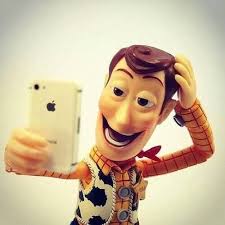
selfie

The term ” Selfie” was officially added to the Oxford Dictionary in 2013. People all around the world have been turning their phone camera around to capture themselves in a moment. Many people believe that our selfies reveal a lot about us. It is for this reason Professor Marino from University of Southern California has created an assignment for his students to critically read their selfies. His assignment is titled Know Thy Selfie 🙂 Marino believes that selfies help us analyze our identities because “each selfie bears information that can be used  to read our identity  characteristics: our race-ethnicity, gender, sexuality, and socio-economic status.”

The Assignment:

Write a thesis-driven essay in answering the prompt:

How do your selfies produce or obscure a sense of your identity?

1. Take or choose 5 selfies of yourself. You may be alone or with another person, but try to make sure you are a central and large part of the photo. All of the selfies should be different.

2. Examine your selfies for your performance of
Race-ethnicity
Socio-economic staus
Sexuality
Gender

3. Consider these identity characteristics independently and as they intersect.

Some questions for reflection as you prepare your response.

What in your selfies is accurate?
What is obscured or ambiguous?
Does the image portray one identity trait more than others?
Where do the images place you in the spectrum of possibilities for each characteristic trait — for example, more or less feminine or masculine?
How might different audiences perceive the images differently?
How is the viewer addressed in the image?
How do your selfies play off other well-known images? How do they play off each other?
What is the apparent context of this image? How does that affect how it might be read?

Read more about ‘Know Thy Selfie’ assignment here:

View at Medium.com

What counts as a “real” word?

Last week Clare shared a TED talk exploring how texting is affecting language (If you haven’t read that post, here it is: https://literacyteaching.net/2015/01/22/txtng-is-killing-language-jk/ ). In a follow-up to her blog post, I am sharing another fascinating talk on “What Makes a Word Real?”

English Professor, Anne Curzan, poses questions to the audience which intend to challenge what makes a word “real” and who gets to decide. She asks: “Who writes dictionaries?”; “Are you bothered by language change?”; and “Who has the authority to make a world real?”

Curzan believes words are made “real” when a “community of speakers” use a word often and for a long time. She makes the point that these words “fill a gap” in the English language. Funny examples of words she’s seen gain traction recently:

                    Screen shot taken from TED Talk

Curzan argues dictionaries have been viewed as a book of truths not to be critiqued for too long. In fact, she points out that dictionary editors look to us to decide what words are “real.” In conclusion, she states:

 “Dictionaries are a wonderful guide and resource, but there is no objective dictionary authority out there that is the final arbiter about what words mean. If a community of speakers is using a word and knows what it means, it’s real. That word might be slangy, that word might be informal, that word might be a word that you think is illogical or unnecessary, but that word that we’re using, that word is real.”

TED Talk Link:

Using Instagram in the Classroom

They say a picture is worth a 1000 words. That is probably one of the reasons why Instagram has become my social media app of choice. I love the simplicity of it. There are no words, simply photos. You get to see what your friends, acquaintances, and public figures (you choose to follow) are up to. My use of facebook has slowly dwindled while my use of Instagram has quickly ramped up. This seems to be the general trend across the world. As educators in this digital age, we think about how to integrate social media effectively into the classroom. Facebook, wikis, blogs and twitter have made their way into many classrooms; however, Instagram is rarely used. I found this very cool infographic for educators and the use of Instagram in the classroom.

All of the below suggestions can be used in K-12 classrooms. Some can be used in higher ed. Contexts.

***Note: Before using Instagram in the classroom:

  • I think educators should have separate Instagram accounts if they are also using it for personal purposes.
  • Also, as a class you should establish a hashtag. So, if your students want to hashtag a relevant picture it gets included in the class hashtag.

10-ways-to-use-instagram

http://www.weareteachers.com/blogs/post/2014/08/07/10-ways-to-use-instagram-in-the-classroom

The Power of Collaboration

Social networking has shown us the power of collaboration. Through applications like Twitter, Facebook, and Instagram we learn with and from one another at a speed like never before. Sir Ken Robinson reminds us of the need to foster collaboration:

Most original thinking comes through collaboration and through the stimulation of other people’s ideas. Nobody lives in a vacuum. Even people who live on their own—like the solitary poets or solo inventors in their garages—draw from the cultures they’re a part of, from the influence of other people’s minds and achievements….This is one of the great skills we have to promote and teach—collaborating and benefiting from diversity rather than promoting homogeneity.

Unfortunately, with the rise of standardized testing in many countries, collaboration is not being valued. Robinson explains:

We have a big problem at the moment—education is becoming so dominated by this culture of standardized testing, by a particular view of intelligence and a narrow curriculum and education system, that we’re flattening and stifling some of the basic skills and processes that creative achievement depends on.

Although comedic in nature  the cartoon below raises some important questions around assessment. Do high-stakes tests help prepare our students for the world in which they will work.  Why don’t we value collaborative learning/assessments in schools?

socialnetworking