Tag Archives: critical literacy

Just for Fun- A Literacy Word Search

In the word search below, can you find…

1. The name of the theorist generally accredited with the origins of Social Constructivist Theory

2. The term used to identify a branch of linguistics which contends that meaning-making manifests through human interpretations of sign systems

3. The names of the two researchers accredited with constructing the four resource model

4. The term assigned to multiple modes of communication

5. The Literacy Theory that purports literacy and language are not neutral but political.

6. The name of a pedagogical approach designed by 10 scholars known as the New London Group in 1996

Scroll down for answers- but no peeking!


Z C X B N O L M R T Y Y I O P K
A C V N Q W R U T U J L A S D F
B V M N W E F L A S D F G H H J
Q Y W E M U L T I M O D A L O P
A G D G J K O I M N B V C X Z A
W O E T Y P U L U K J H G F D S
Z T X C V B N I M L H F D S A E
C S T G H K L T O U Y T E R W Q
V K N N L H O E I T R E W A Q P
R Y T Y U I P R I Z X C V B N M
Z L U K E M V A O P U Y T R E W
C X B N M L Q C R I T I C A L Q
Q W E R T Y U I I O P L K J H G
H G F D S A S E R T Y U I O M N
D F G H J K L S E M I O T I C S
Q S D C F R E E B O D Y C A T Y


Answers:  1.  VYGOTSKY 2.  SEMIOTICS  3.  LUKE, FREEBODY  4.  MULTIMODAL  5.  CRITICAL  6.  MULTILITERACIES


Open Street Maps: Taking Action and Focusing on Multiple Perspectives

Nora Young, the host of CBC Radio’s Spark, was the keynote speaker of a conference I (Pooja) attended yesterday. She spoke about data science as a growing field of study, in fact, many universities have created departments of data science.  With the growth, Nora noted, comes a need for what she called critical data literacy. She illustrated the need for critical data literacy with an example of mapping technology. Google maps have quickly become the go-to application for finding directions and/or locating businesses on a map. However, being critically data literate,  guides us to  question like: who gets to decide what appears on a map? The answer is most often large multi-million dollar enterprises like Google.

To disrupt google’s monopoly of the growing online map industry, initiatives like Open Street Maps have been created. In January of 2014, The Guardian commented on the need for applications like Open Street Map. They likened it to  “a wiki-like map that anyone in the world can edit. If a store is missing from the map, it can be added in by a store owner or even a customer. In terms of display… each person or company who creates a map is free to render it how they like..” (Wroclawski, 2014) A site, which allows community members to add and edit a map of a community to which they belong, is powerful because it positions community members as experts.

I am looking forward to bringing this mapping technology into my classroom. I hope my students can create maps of their neighbourhoods.

A snapshot of a map made by community members:

openmap

Read more about Open Street Map:

http://www.theguardian.com/technology/2014/jan/14/why-the-world-needs openstreetmap

The Tiffinwallahs’ delivery system as a form of literacies

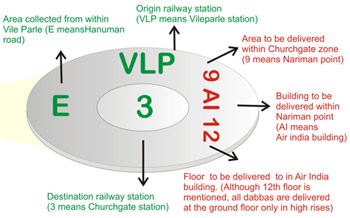
Recently, a friend started a lunch delivery service. She makes healthy, delicious, and affordable lunches every day. The lunches are delivered in an aluminum container, also known as a tiffin. She got this idea after watching a documentary about Mumbai’s Tiffinwallahs aka Dabbawallahs (those who deliver tiffins). Each day in Mumbai, “approximately 4,000 dabbawallahs deliver 160,000 home-cooked lunches from the kitchens of suburban wives and mothers direct to Mumbai’s workers.”Harvard’s Business School has studied this intricate delivery service, calling it “the world’s most ingenious meal distribution system.” What makes this service so fascinating to me is the coding system the tiffinwallahs have created. Although many do not have traditional literacy skills of reading and writing, they have re-defined literacy by creating a of successful and efficient communication through elaborate colour coding. Forbes magazine has awarded the “dabbawallahs a 6 Sigma performance rating (a term used in quality assurance if the percentage of correctness is 99.9999999 or more).” The business is also growing at a steady pace of 5-10% year.

The colour/numerical code created for the lids of tiffins:

code

Watch the Tiffinwallahs in action:

https://www.youtube.com/watch?v=fTkGDXRnR9I

Read more about the Tiffinwallahs in Mumbai here:

http://signalvnoise.com/posts/2882-the-incredible-delivery-system-of-indias-dabbawallahs

Can a hashtag make a difference?

Recently, a Globe and Mail article questioned the impact of the Twitter campaign #BringBackOurGirls, designed to draw attention to the abduction of hundreds of Nigerian schoolgirls by an extremist group. The article noted that such online campaigns often ignite fierce, yet fleeting concern for a cause, which ultimately fails to provoke any “particular” action. Indeed, the article echoes the sentiments of others who have critiqued the merits of “digital advocacy.” For instance Malcolm Gladwell argued that online forms of activism such as “Facebook activism succeeds not by motivating people to make a real sacrifice but by motivating them to do the things that people do when they are not motivated enough to make a real sacrifice…which he suggested “makes it easier for activists to express themselves, and harder for that expression to have any impact.” Having participated in a variety of rallies over the years, I (Lydia) understand the momentum that can be mobilized and connections cemented when people collectively gather within physical spaces to champion social causes, matters of concern, and contentious political issues. I do, however, wonder if social media platforms provide an opportunity for us to broaden our conceptions of the creation of publics, public engagement, and relational encounters within social contexts. At the very least, such social media campaigns have demonstrated that they have the potential to draw attention to social issues, communicate information, and establish connections between affinity networks on a massive scale.

Link to the Globe & Mail article: m.theglobeandmail.com/news/world/abduction-of-nigerian-girls-draws-world-outrage-but-can-a-hashtag-offer-any-help/article18596825?service=mobile&cmpid=rss1&click=dlvr.it

IMG_0925

Teaching Social Justice Through Action

j4mw

Last week at the 22nd Annual Labour Fair my (Pooja) class attended several sessions, but one profoundly affected us all. Activist Chris Ramsaroop from Justice 4 Migrant Workers (J4MW) came in and spoke to us about issues migrant workers in Canada face such as a lack of health benefits, sub-par living conditions, and low hourly wages. For many, this was the first they had heard about migrant workers in Canada. And so, many were surprised to learn some of the unsettling history around migrant workers and human rights violations.

To deepen our awareness on the issue, the following day we watched Min Sook Lee’s documentary “El Contrato.” This heart-wrenching documentary gave faces and narratives to the cases Ramsaroop spoke about the previous day. Students were deeply moved by the documentary, asking after:“What can we do?”; “How can we show we care?”

Wanting to take action, a moved student looked through the J4MW website and found there was something we can do: The J4MW group is looking for court support on Tuesday, March 25, 2014 (today) regarding migrant workers access to healthcare. To demonstrate support and solidarity, the J4MW wants to fill up the open court at Osgoode Hall to send a message. My class, along with two other sections eager to attend, will be in attendance at the court today.

I have deviated from my curriculum to make room for this issue my students (and I) have come to care so passionately about. I’ve seen students utilize an extensive range of literacies over just one week: they have organized themselves into groups to get to Osgoode Hall and back; they have conducted research on previous cases related to migrant workers’ access to healthcare in Ontario; and they have critically thought and discussed what it means to buy “local” produce in Ontario.

To learn more about the provincial court hearing today at Osgoode Hall, check out the link below:

http://j4mw.tumblr.com/post/80321298359/defend-migrant-workers-access-to-healthcare-in-ontario?utm_content=buffer9bc1c&utm_medium=social&utm_source=twitter.com&utm_campaign=buffer

If you haven’t had the opportunity to watch “El Contrato,” I  highly recommend watching it. Below is a synopsis and link to the documentary:

This documentary from Min Sook Lee (Tiger Spirit) follows a poverty-stricken father from Central Mexico, along with several of his countrymen, as they make their annual migration to southern Ontario to pick tomatoes. For 8 months a year, the town’s population absorbs 4,000 migrant workers who toil under conditions, and for wages, that no local would accept. Yet despite a fear of repercussions, the workers voice their desire for dignity and respect.a poverty-stricken father from Central Mexico, along with several of his countrymen, as they make their annual migration to southern Ontario to pick tomatoes. For 8 months a year, the town’s population absorbs 4,000 migrant workers who toil under conditions, and for wages, that no local would accept. Yet despite a fear of repercussions, the workers voice their desire for dignity and respect.

https://www.nfb.ca/film/el_contrato

The Power of Children’s Literature and its Omissions

While I (Yiola) knew there was a lack of representation of  “people of colour” in children’s literature, I was surprised to read the statistics. The chart below shows the number of books published last year and the number written ‘by’ and ‘about’ the different groups defined as ‘people of colour’.


Year

Total Number
of Books
Published (Est.)

Number of Books
Received
at CCBC


African / 
African Americans


American Indians

Asian Pacifics/
Asian Pacific Americans


Latinos


By

About

By

About

By

About

By

About

2013

5,000

3,200

67

93

18

34

90

69

48

57

Two fantastic articles in the New York Times last week prompted me to write this blog:

http://www.nytimes.com/2014/03/16/opinion/sunday/the-apartheid-of-childrens-literature.html?ref=contributors&_r=0

http://www.nytimes.com/2014/03/16/opinion/sunday/where-are-the-people-of-color-in-childrens-books.html?ref=contributors&_r=0

The articles share the stark realities and implications of the statistics represented above from the experiences of African American men, writers themselves. Reading the articles echo and confirm what I believe to be the realities and consequences of our publishing marketplace.  And yet, what to do about it?

The other day I was speaking to a high school educator (a behavior specialist, child and youth worker) who shared stories with me about boys in her school who are misbehaving, who are rude and disrespectful.  I shared with her the ideas that their behaviours must stem from something much bigger than an attitude problem… that they may feel oppressed, misrepresented or not represented at all by the school and broader society.  I do not think she was buying my argument.

My role as a teacher educator is to inform future teachers of the realities of teaching, learning and schooling.  Part of that role includes understanding how systems work for and against particular groups and individual students. One concrete area for exploring such systems is children’s literature.

Christoper Myers, author of “The apartheid of children’s literature”, describes books as maps to identity and ways of being:

[Children] see books less as mirrors and more as maps. They are indeed searching for their place in the world, but they are also deciding where they want to go. They create, through the stories they’re given, an atlas of their world, of their relationships to others, of their possible destinations.

The consequences of excluding certain groups:

what it means is that when kids today face the realities of our world, our global economies, our integrations and overlappings, they all do so without a proper map. They are navigating the streets and avenues of their lives with an inadequate, outdated chart, and we wonder why they feel lost.

Alternatively, Walter Dean Myers, author of the second article, explains what happened to him when he connected to a text: 

Then I read a story by James Baldwin: “Sonny’s Blues.” I didn’t love the story, but I was lifted by it, for it took place in Harlem, and it was a story concerned with black people like those I knew. By humanizing the people who were like me, Baldwin’s story also humanized me. The story gave me a permission that I didn’t know I needed, the permission to write about my own landscape, my own map.

And so, how do we as teacher educators empower teachers so they empower students to realize the flawed systems we live in but and to move beyond them to ensure each child can navigate and negotiate their personalized, broad, rich landscape of possibilities?  I suggest: we ourselves develop a critical stance and what Noddings calls a culture of care; we are explicit about the realities of the systems we currently work in; and we work hard to search out texts and materials that share rich stories of all of our students and beyond.  More so, I suggest we move to change the marketplace by publishing texts that begin to close the gaps in representation in children’s literature.

The Danger of a Single Story

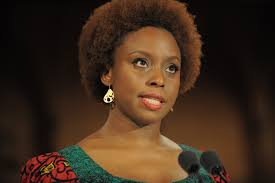
When engaging with students about Media Literacy, I (Pooja) often like to begin with novelist Chimamanda Ngozi Adiche’s powerful TED talk entitled The Danger of a Single Story. Through the use of her own narrative, Adiche speaks about the prevalence of a “single story” or the dominant culture portrayed throughout most school curriculums. Adiche shares the following memory of being taught a single story:

At about the age of seven … I wrote exactly the kinds of stories I was reading: All my characters were white and blue-eyed, they played in the snow, they ate apples, and they talked a lot about the weather: how lovely it was that the sun had come out. This despite the fact that I lived in Nigeria; we didn’t have snow, we ate mangoes, and we never talked about the weather, because there was no need to.

Adiche speaks about the impacts the single story has on an individual, on a community, and on society at large. While a young school girl in Nigeria, Adiche recalls only reading authors from the West. Having never encountered the works of an African author or seeing people like her appear in books, she believed she could not (or should not) be a writer.  She asserts that when we receive only one perspective on anything it creates stereotypes, “and the problem with stereotypes is not that they are untrue, but that they are incomplete. They make one story become the only story.”adiche

This TED talk sparks lively discussion in the classroom. Students often think back to their early schooling and many recall “single stories” they experienced. As a class, we capture all of these experiences on a large poster. As new text is introduced in the course we often refer back to this “single story” poster and discuss who’s stories are being represented in what we read/hear/see.

Family Day

In Ontario we have a public holiday called “Family Day”, a day in the depths of February where most adults have the day off from work and children stay home from school for the purpose of spending time together. It is a day meant for us to relax and enjoy the wonderful people in our lives.
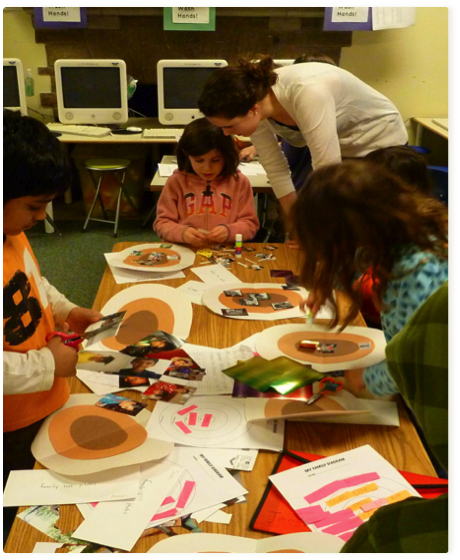
In honour of Family Day, I (Yiola) would like to share an interesting and inclusive way of thinking about family from the perspective of a child.  This idea comes from the descriptive findings from my research project on critical literacy practices of elementary school teachers.  In the Grade two classroom students designed their autobiographies and published books called “Selfologies”.  The published books include a variety of literacy process and forms of writing including: interviewing family members, writing narratives, developing timelines, creating family trees to mention just a few.
Instead of a traditional family tree that is a chart representing the family structure, often with the child at the bottom of the tree and the space for the father on one side and the mother on the other, the teacher used something different.  The teacher recognized the traditional family tree chart normalized the nuclear family and left no space for all the wonderful family structures that exist. The teacher introduced a “family circle”.  This graphic organizer places the child at the centre of the page and bigger circles that include family members surround the child (see image below).  This way of organizing the concept of family changes the perspective and value we place on “what is a family” and “who is in a family”.  The family circle empowers the child to decide on their own who is in their closest inner circle. That may be siblings, two mothers, a grandparent, a family friend. By using a new and improved structure we are teaching students how to read the world differently. Family today is a broader and more inclusive term.

The first image is of the children designing their family circles.

Image Family YC

Family Circle


Narratives of Teacher Educators

Book cover

I (Pooja) recently finished reading Negotiating critical literacies with teachers: Theoretical foundations and pedagogical resources for pre-service and in-service contexts (Vasquez, V.M., Tate, S.L, & Harste, J.C., 2013). This book provides a theoretical framework, insightful examples, and pedagogical resources for ways to incorporate critical literacy practices into pre-service and in-service teacher education. The final chapter of this text entitled “Teaching and living critical literacies” especially interested me. This concluding chapter focused on the narratives of the authors who are all teacher educators. They shared early childhood memories, classroom teaching experiences, and turning points (e.g. being the first in the family to attend college; protesting the Viet Nam War). Much of what the book’s authors shared in their written narratives reflected closely what many of our critical literacy participants in our SSHRC study have expressed. Many can identify turning points and life events in their early childhood, which contributed significantly to their philosophy and stance towards teaching and learning. Maya from our study identified being placed in a low-track after immigrating to the U.S. as a defining moment. This has influenced her practice because she now focuses on having her student teachers understand multiple perspectives and interrogate their assumptions of students, curriculum, and schooling. Providing a specific example of this pedagogical stance, Maya told us about how she conducts an entire lecture in Spanish, locating student teachers as second language learners.

This final chapter reinforced how meaningful it is to create space for the voices of literacy teacher educators.  The narratives of our participants are rich with experiences that influence their practices in the classroom. Stacie L. Tate, book author and teacher educator, articulates this well: “When people ask how I decided to become a teacher and researcher, I always reply, “I was groomed for this.” (p. 99).

Critical Literacy vs Language Acquisition

Critical literacy and Language acquisition.  I (Yiola) have pondered these two concepts — what they mean, what they entail, and why they are important.  In much of the literature I have read, there appears to be distinct 2 camps:  those who study language acquisition that is, how we learn to read and write: how we develop phonemic awareness, and learn to decode, and develop syntax and those who study critical literacy: a newer approach to learning how to analyze and understand texts in a socially conscious way.  I have asked myself, are they in two distinct domains of Language discourse? They appear to be. Do you agree?  Yet, when I think about teaching literacy to children in the context of schooling and what readers and communicators need to know, then critical literacy is a form of language acquisition. Children must know how to read and analyze texts, and they must know how to read and analyze the world. Children acquire language through critical literacy. Critical literacy is then a significant part of language acquisition. In teacher education literacy courses, is the concept of critical literacy taught with the same importance and priority as the more traditional methods and means for language acquisition? Ultimately I’m wondering, what are the essential components of literacy curriculum for 21st century teacher education programs?