Tag Archives: literacy teacher educators

Sharing Our Research

Today the research group will be presenting work from the project Literacy Teacher Educators: Their Backgrounds, Visions and Practices, at the Ministry of Education/Faculties of Education Forum – Research Practice: Nurturing relationships for teaching, learning and well-being. It will be an interesting and exciting day.

Literacy Teacher Educators: Preparing Teachers for a Changing World (Book Cover)
Literacy Teacher Educators: Preparing Teachers for a Changing World

Teacher Educators, Literacy Educators, and Digital Technology Experts Working Together

Making ConnectionsI (Clare) am pleased to share some good news. We submitted a proposal to the Social Sciences and Humanities Research Council of Canada (SSHRC) to fund the project Rethinking Literacy Teacher Education for the Digital Era: Teacher Educators, Literacy Educators, and Digital Technology Experts Working Together. One of the main activities of the project will be bringing together 16 experts from three fields and 4 countries (Canada, US, UK, and Australia) to address the following questions.

  • How is our understanding of literacy evolving in light of the new ways we communicate?
  • How can literacy/English teacher educators (LTEs) prepare student teachers to develop and implement literacy programs that capitalize on digital technology (DT)?
  • What teacher education curriculum changes are required to better prepare future teachers to integrate technology in their own teaching?
  • What professional learning support do LTEs need to develop courses that will integrate and make greater use of DT?

As a team we are going to work together to:

  • develop a statement on literacy teacher education that offers direction on how to integrate digital technology into teacher education literacy courses;
  • extend our website http://www.literacyteaching.net to include video interviews of all the participants discussing their views and current research and their course outlines and supplementary course materials;
  • produce an edited book Crossing Boundaries: Literacy/English Teacher Educators Incorporating Digital Technology in Their Courses

 Click here to read the summary of the proposal. Final Summary of Proposal

As academics we tend to work in our “silo” which although allows us to specialize it has Connecting Peoplelimitations. The symposium will provide an opportunity to work in an inter-disciplinary manner which may help us move forward the field of literacy teacher education. My co-applicants for the proposal are Lin Goodwin (Teachers College), Simone White (Monash University), Bethan Marshall (King’s College UK), Jean Murray (University of East London), and Clive Beck (University of Toronto). I will continue to provide updates on our work.

A Foot in Many Camps: Literacy Teacher Educators Acquiring Knowledge Across Many Realms and Juggling Multiple Identities

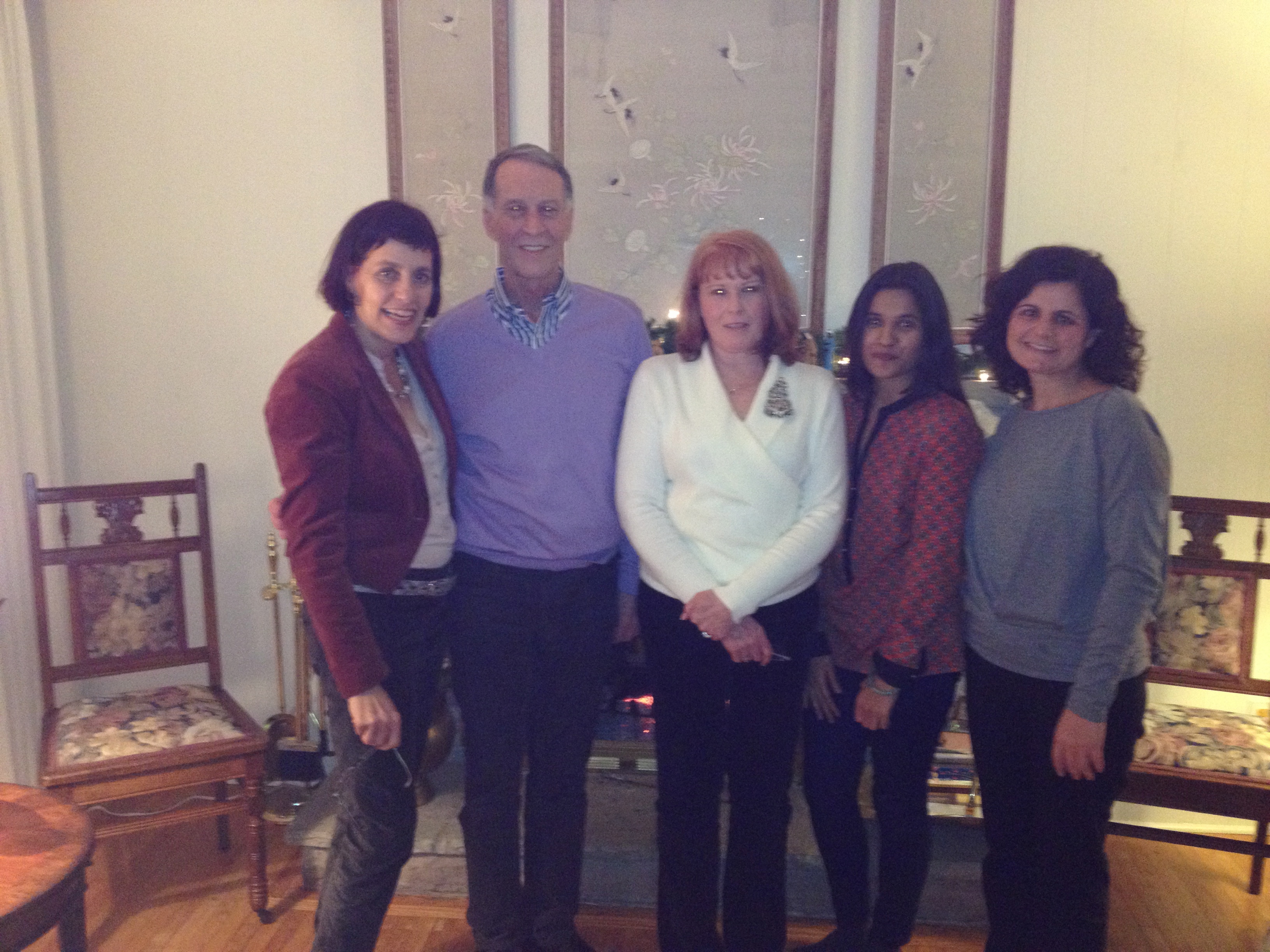
research teamFor those of you have been following this blog, you know we are conducting a study of literacy/English teacher educators in four countries (Canada, U.S., Australia, and UK). Our first paper from the study has recently been published in Journal of Education for Teaching 39(5), 534-540. The paper A Foot in Many Camps: Literacy Teacher Educators Acquiring Knowledge Across Many Realms and Juggling Multiple Identities is available through this link:  Foot In Many Camps

In the paper we describe how the teacher educators had a range of classroom teaching experience which they drew on in many ways. Most went far beyond simply telling stories about their previous work. All were heavily influenced by their own childhood experiences, which continue to affect their current work. Many felt that they needed to hold dual identities, teacher and academic, because they were still heavily involved in schools through their research and in-service activities. Several felt that there was a hierarchy in their department with those most removed from schooling at the highest tier. Most saw themselves in the field of literacy not teacher education and gravitate towards literacy-focused conferences and journals rather than those in teacher education. I (Clare) hope you find the paper interesting. We certainly have found this entire study fascinating.

Presentations

On Saturday a number of us from our research teams presented at the Ontario Teachers’ Federation/Ontario Association of Deans of Education conference. We did two papers:

·      Teaching Student teachers How to Teach for Relevance, Integrating Curriculum around Big Ideas and Key Values

Clive Beck, Clare Kosnik, Shelley Murphy, and Elizabeth Rosales

·      On-going Learning for Literacy/English Teacher Educators: Examining Four Spheres of Knowledge

Clare Kosnik, Pooja Dharamshi, Cathy Miyata, Lydia Menna, and Yiola Cleovoulou


Click on the link Publications and Presentations to see our powerpoint presentations. (Clare’s ppt can be found under Clare’s presentations; Clive’s ppt can be found under Clive’s presentations.)

A multitude of communication resources

cartoon_newliteracies

When I saw this comic it made me chuckle.  I enjoyed the comic’s gentle reminder that children/youth routinely engage with and expertly navigate a variety of communication tools. Clare and I (Lydia) conducted a two-year collaborative self-study of our efforts to incorporate various technological resources (e.g. a wiki) into our pre-service literacy methods courses. This research helped us identify both the challenges and successes we encountered along the way.  Our research efforts also made us more mindful of why we chose to incorporate certain technological resources into our pedagogical practice — questioning for what purpose and to what end.   Through the analysis of our efforts we realized that we had initially seen technology as an end in itself, not as a tool to support learning. In the second year of the study, we focused much more on student learning and became more systematic in our efforts. Over the two years of the study, our identities as teacher educators shifted as our pedagogies became richer, our use of technology more fully integrated into our literacy courses, and we received validation from others and from each other.

Defining Literacy

Literacy in the 21st century. What does it mean? Or perhaps the better question to ask is, what does it mean TO YOU?Children reading

  • If you are a writer, editor, public relations manager perhaps literacy means the the ability to read and write.
  • If you are a financial advisor perhaps literacy means the ability to understand “how money works in the world” (financial literacy).
  • If you are a journalist, analyst, or film maker perhaps literacy means the ability to “analyze, evaluate and create messages in a wide variety of media modes…” (media literacy).
  • If you are weather analyst, forest ranger, or environmentalist perhaps literacy means the ability to “understand ecological principals and the ways society  affects, or responds to environmental conditions” (environmental literacy).
  • In keeping with the Winter Olympics, if you are an athlete, perhaps literacy means the ability to “move with competence and confidence in a wide variety of physical activities in multiple environments” (physical literacy).
  • If you are an elementary school educator, literacy means all of the above. If you are a elementary school student, literacy means all of the above.
  • If you are a literacy teacher educator, literacy means… By Yiola
    * definitions taken from online google searches, mainly wikipedia.