Tag Archives: social media

Rescue Time

Self tracking applications (e.g. Fitbit, Sleep Cycle, Moodpanda, MyFitnessPal) have gained much popularity over the past few years. People want to track how many calories they are consuming; how many steps they are taking; how many hours of deep sleep they are getting.

I was recently introduced to another self-tracking application, Rescue Time. This application monitors your computer and tracks usages such as hours spent on e-mail, hours spent writing, and hours spent on facebook (too many!) According to their website (https://www.rescuetime.com), Rescue Time believes their application can help you be the most efficient with your time:

Image taken from Rescue Time's website
Image taken from Rescue Time’s website (https://www.rescuetime.com)

On one hand, with so many possible distractions at play while working, I see that Rescue Time could be a useful tracking tool. However, on the other hand, I wonder if Rescue Time could add to my already long list of possible distractions!?

Has anyone used this application? What have been your experiences? I would love to hear from you!

The Future is Here: Social Media in the 21st Century

Tug AgencyOur Symposium was held at Tug Agency http://www.tugagency.com
Founded by Nick Beck Tug Agency is “a search marketing led agency, specialising in pay per click
advertising, biddable display, search engine optimisation, affiliates and 
social media marketing.” (If this is a new world to you, definitely check out their website.)

A HUGE benefit of having the Symposium at Tug was the opportunity Nick Beckto interact with some of the amazing staff. Nick found time to join our informal discussions on digital technology and teacher education. Luckily, two of his staff who specialize in social media found time to discuss their work with us. Eoin O’Neil and Simon Jenkins talked about “how” social media “works,” how search engines can use our past searches to “predict” what we might look at next, the complex formulas used by companies to identify patterns, and so on. Hearing from experts on the power and use of social media contributed to our discussion on place of digital technology in teacher education. Nick, Eoin, and Simon clearly showed that the “future is here” and we need very tech-savvy teachers who understand being digital citizens and the place of digital technology in education. We definitely made connections between teacher education and search engine optimization!

Please note that under the Connection Grant tab I (Clare) have added a photoarray from the Symposium; some of the ppt presentations; and some scholarly articles. More to follow.

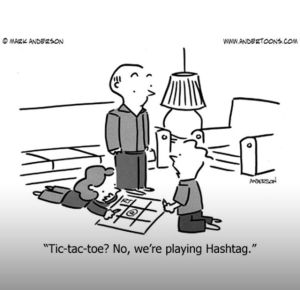
Can a hashtag make a difference?

Recently, a Globe and Mail article questioned the impact of the Twitter campaign #BringBackOurGirls, designed to draw attention to the abduction of hundreds of Nigerian schoolgirls by an extremist group. The article noted that such online campaigns often ignite fierce, yet fleeting concern for a cause, which ultimately fails to provoke any “particular” action. Indeed, the article echoes the sentiments of others who have critiqued the merits of “digital advocacy.” For instance Malcolm Gladwell argued that online forms of activism such as “Facebook activism succeeds not by motivating people to make a real sacrifice but by motivating them to do the things that people do when they are not motivated enough to make a real sacrifice…which he suggested “makes it easier for activists to express themselves, and harder for that expression to have any impact.” Having participated in a variety of rallies over the years, I (Lydia) understand the momentum that can be mobilized and connections cemented when people collectively gather within physical spaces to champion social causes, matters of concern, and contentious political issues. I do, however, wonder if social media platforms provide an opportunity for us to broaden our conceptions of the creation of publics, public engagement, and relational encounters within social contexts. At the very least, such social media campaigns have demonstrated that they have the potential to draw attention to social issues, communicate information, and establish connections between affinity networks on a massive scale.

Link to the Globe & Mail article: m.theglobeandmail.com/news/world/abduction-of-nigerian-girls-draws-world-outrage-but-can-a-hashtag-offer-any-help/article18596825?service=mobile&cmpid=rss1&click=dlvr.it

IMG_0925

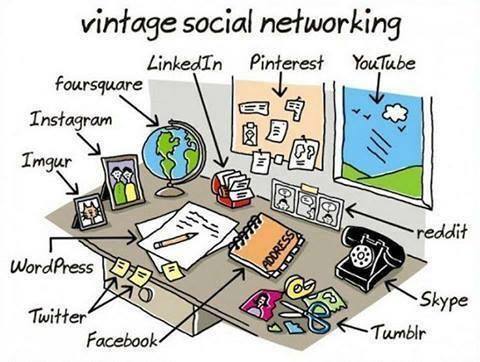
Social Media 101

I (Yiola) came across this while on social media and found it playful… and true!

10259931_10152488203689175_8001628699976626381_n copy


A great explanation of social media and their functions.   I often think about the degree of necessity of each of these forms of communication — what they offer and their implications for communication and social interactions.  I am contemplating the pros and cons and beginning to explore literature that shares findings of the implications of our newer forms of communication.

Spoken Word: Life, Literacy and Communications

I (Yiola)  remember watching the news  in the mid ’80s and listening to the news anchors describe the possibilities and implications of the internet.  I had no idea of the magnitude of change this new form of literacy would bring. Could anyone really imagine the changes we would experience in our daily interactions?  Online communication, information sharing, cellular technology and social media have completely changed the way we operate in the world today.

I came across this interesting link — a spoken word (poem) — about the impact new literacies  has on our lives.

The message I find most powerful is the irony that social media connects us  and yet in some ways we have never been more isolated or at a loss for opportunity… community companionship a sense of inclusion yet when you step away from this device of delusion… you awaken to see a world of confusion… 

From an educator and parents point of view the poem’s message that struck a cord: We’re surrounded by children who since they were born, watched us living like robots and think its the norm.  What is our cultural norm? Compared to pre-online technology are we behaving like robots?

I tend to agree with much of what the poet shares and enjoyed this spoken word. I hope you enjoy it too.


Replacing Textbooks with Flipboard

flipboardOne of my(Pooja) favourite, and most used, apps on my smartphone is Flipboard. If you don’t have it, download it now! It’s free, it’s fun, and Jeff Utecht (educator, blogger, and author) believes it could revolutionize the textbook. Utecht calls Flipboard’s magazine a “game changer” in the classroom because the students can easily help contribute to content:

I want students to have the ability to add content to their “textbook” as well. Content that we can discuss in the classroom, that can spark conversation…the real reason we come together…to be social. What if we could have all the students in a class adding to the “textbook” have them find things that interest them on a given topic and allow them to “flip” that into our “textbook” as well. Flipboard allows that too…where you can invite others to add to your Flipboard magazine.

 Utecht also explained how when using Flipboard along with social media a real time “class magazine” could be created:

…The class magazine (aka textbook) becomes part of that but so does other things that interest them. Also…..because you can search a twitter hashtag and add that to your Flipboard. A class hashtag now becomes part of the conversation. Where kids can tweet something, hashtag it with something like #engp1ju (English Period 1 Jeff Utecht) and have all that content in their new “textbook” as well.

 I think this a wonderful way to re-imagine the textbook. I will attempt to co-create a Flipboard magazine with my class and report back! Happy “flipping!”

Read more here:

http://www.thethinkingstick.com/flipboard-as-a-textbook-replacement/