Monthly Archives: June 2015

High School Graduation

We become so entrenched in our own ways of knowing and doing that in order to realize something different we must experience it — with our senses and hearts.  I (Yiola) had the privilege of attending a high school graduation in the USA as a spectator, as a parent. This experience reminded me of the differences across Canadian and American education systems.

The American high school graduation was far different than my Canadian experiences of high school culture. Everything was bigger. East Madison High, with over 400 graduates, held its high school graduation ceremony at the Kohl Centre (oops, Center), which is a huge sports stadium, similar to our Air Canada Centre. There was a choir, and a band, and the speeches were shown on the big screens.  The concession stands were open, there was security at each isle and uncover police were walking among the crowds. I felt like I was at a rock concert.

Much like our ceremony, there were speeches, and songs, and students were called up to the stage and given their certificates. Unlike our ceremony there were speeches given by the school’s Security Guard and school council as opposed to a selected valedictorian.  Really, the cultural context (seems obvious) of the speeches was just different. There was much focus on the sports teams, the arts, and less on academics. There was much talk of community and resilience and less talk of literature, writing, or literacy… although, there was mention of spoken word and some rap embedded in the speeches.

As I sat in the arena at Madison, Wisconsin and looked at the beautifully diverse group of high school graduates I thought about the remarkable work of the students, the teachers, and the scholars of the education community and felt a deep sense of appreciation for their work; a constant movement against the grain of standardization and numeration. I saw individuality immersed in institution. I saw creativity wrapped in convention. I saw hope.

Congratulations to all high school graduates.

graduation sasa

Let’s Not Forget About the Teachers

I (Clare) read this tribute to teachers in the Huffington Post. Lindsay Henry got it right. If you have a minute please send to this a teacher you know – I know that I would not be where I am today if it not for the many teachers who cared about me and worked tirelessly. I bolded a few lines in Henry’s original text.  http://www.huffingtonpost.com/lindsay-henry/this-ones-for-the-teacher_b_7555134.html

This One Is for the Teachers By: Lindsay Henry

It’s graduation season. A time where we focus our eyes and spotlights and applause on the students who successfully pushed through the exams, the essays, the sports games, the drama, to walk across a stage and receive that diploma. To graduate. Finally.

Whew.

So we celebrate. We honor the graduates with parties and families and photos and cake. Lots of cake (preferably with heaps of frosting and rosettes and plastic graduation caps.) We write “Congratulations” on cards and give “How to Succeed in the Real World” books and write “Top 10 Things I Learned When…” blog posts. Of course the graduates deserve the praise and recognition and celebrations and cake and blog posts.

But this post isn’t for the students.

This one’s for the teachers.

This one is for the teachers who stand in front of the students every day, writing on white boards and planning lessons and doing all they can to prepare youth for the rest of their lives. This one’s for the teachers who are full of nerves and anxiety on that first day of class in the fall, then bittersweet sadness as they say goodbye in the spring. The Silent Heroes who put in the work day in and day out, sometimes viewed as the antagonist by the students for assigning those group projects, required readings, difficult tests.

But teachers face their own tests, too. So this one’s for them.

This one is for the teachers who made it through another year full of hurdles. The long days and worrisome nights, the frustrated parents, the conferences. The detentions. The decisions. The reviews. The observations.

This one’s for the teachers that blur the lines because you care so much for these students, as if they are an extension of your own family. The ones that make sure the kids have full bellies and open minds. The ones that are the only constant in some of their students’ lives, filling the void as a caretaker or pseudo parent. The ones that use their own money to pour back into the classroom with materials and books and supplies.

This one’s for the teachers that are so much more than teachers. The ones that are fighters, advocators, listeners, healers, all to reach one more.

This one is for the hard days. The days that are long and the nights are longer, your mind racing and running. The days where teachers feels unsure of themselves, the ones that go home and wonder if they are making a difference, if the lessons are sticking, if they should just pack up the apples on their desks and stop trying.

You matter. The lessons stick. Trust me.

My high school days are long behind me, but the lessons live on and those who taught me. So this one’s for them, too.

This one’s for Mrs. Kochendorfer, my first-grade teacher at Patterson Elementary in St. Charles, Michigan, who’s proud, grinning face is still etched in my memory when I read her “The Rainbow Fish,” just a shy 6-year-old back then with Keds shoes and blunt bangs.

This one’s for Miss Bell, with her huge heart and booming voice shouting throughout my high school hallways: “Practice abstinence!” We laughed with her and loved her because she laughed and loved us first.

This one’s for Mr. Brownlie, with his easy-going manner and button-down shirts and soft-spoken voice. He retired this year, and his dedication and love for his students poured back to him as his former students created a hard covered book thick with pages full stories of how he impacted their lives.

This one’s for the future teachers, the college students in classrooms of their own right now, balancing the act of being a teacher and a student, observing and soaking it all in so they are ready to change lives.

Because that’s what teachers do. They do more than teach. They shape us. They lead us….until we reach the finish line and throw our caps into the hair, grinning at the idea of the future, unsure of what’s next.

But teachers know what’s next: another school year. And so they begin another season of preparation and books and lessons and worries centered around fresh faces sitting in desks.

In this season of mortar caps and gold tassels, Dr. Seuss and “Oh The Places You Go!” lines are repeated as we stare at the backs of the graduates running forward into the so-called real world. But let’s pause for a moment and thank the teachers that helped get them to this point. Because without them — sorry Dr. Seuss — we wouldn’t have a lot of places to go. We would all be a little lost.

Congratulations, students. And congratulations, teachers. You did it. All of you

What is your Munsch favorite?

Yesterday, Robert Munsch turned 70.  If you are not familiar with Robert’s work, he is one of the most famous children’s authors in North America.  Most of his books are delightfully lively and humorous.  Much like a comedian, he likes to take a simple, truthful situation in a child’s life and show the funny side to it. A delightful example of this is his book I Have to Go Pee, which depicts a child getting bundled into a snow suit and then announcing “I have to go pee!”.  His books usually unfold in a pattern that children love to anticipate and participation in.

Beyond his writing style, I love his telling style, as he is a storyteller in the true sense of the word.  He tells stories (like a performance)  and he is very good at it.  I (Cathy) have had the privilege of working with Bob (Robert is his “author” name) several times as I am also a storyteller.  He is a delight to work with. Bob’s background has always intrigued me.  He studied to become a Jesuit priest, but after working in orpahanages and daycare centers, he decided he would rather work with children. After graduating with his Masters in Education, he moved to Canada (he is American) and worked in the preschool at the university of Guelph.  That was where he started telling stories.  People encouraged him to submit the stories he told and he eventually got one published.  The rest, as they say, is history.

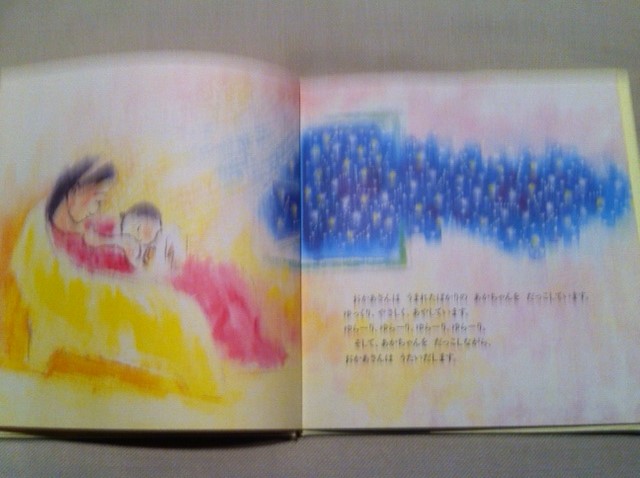
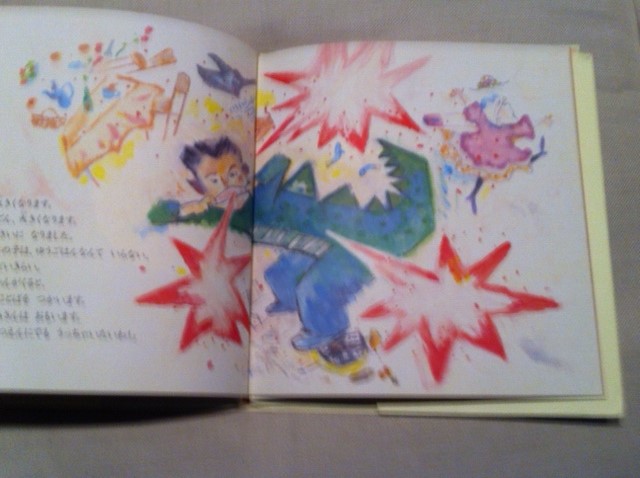
One of Munsch’s best-known books Love You Forever, was listed fourth on the 2001 Publishers Weekly All-Time Best selling Children’s Books selling 6,970,000 copies (not including the 1,049,000 hardcover copies).  In celebration of Bob’s birthday, the cbc  hosted a web page for Bob (link below) on which you can vote for your favorite Munsch book.  I suspect  Love You Forever  will win, as  I personally meet parent and educators worldwide that love that book.  I will also vote for Love You Forever but it is not the American version I love.  It is the Japanese version.  I once hosted an event in my home honoring a group of storytellers that came over from Japan.  Many Canadian storytellers and authors came to the event and, of course, Bob came too.  Graciously, these people gave away copies of their books as welcome gifts to Canada.  As there were about 15 Canadian tellers and authors, Bob just kind of blended in with the crowd, and I knew my foreign guests had no idea who he was or how well known he is.  That is-until they got home and Love You Forever was released in Japan, and became an enormous hit.  One of my guests sent me a copy of the Japanese version and a picture of her and two of her friends taken with Bob.  She was so excited and grateful to have met such an amazing/famous storyteller in person.  Bob, being Bob, would not have thought anything of it. He’s just that kind of person. Below are pictures of the book my guest sent me. I find the illustrations in this version tender and beautiful.  As Bob wrote this story in memory of one of his own children that passed away, I think the illustrations are most appropriate.   That’s my Munsch  favorite.  What’s yours? http://www.cbc.ca/books/munsch70/index.html !cid_E57F0443-35EB-47C7-8284-7385C00597B7!cid_B3FC11F1-450A-4314-8935-0DDC2310E39C!cid_8749C332-F0B7-4526-84F5-FB766894EA18!cid_B5F4DDF3-3F8F-48DE-81B7-B9F779472828

Hip-Hop Ed Fosters Connections

An article in the New York Times highlighted the work of high school English teacher Brian Mooney, who uses the lens of “hip-hop ed” to engage students in the study of complex literary themes. A blog Mr. Mooney created to share his curriculum and student work caught the attention of a broader audience — rapper Kendrick Lamar visited the high school. Students from Mr. Mooney’s English class and the after-school poetry club performed spoken word poems and raps for Kendrick Lamar.

Link to article: http://www.nytimes.com/2015/06/09/nyregion/kendrick-lamar-rapper-who-inspired-a-teacher-visits-a-high-school-that-embraces-his-work.html


Teacher Image in the U.K.

uk

Gillian Harvey from The Telegraph argues for a shift in how teachers are viewed in the U.K. She argues:“[r]ather than heaping initiative upon initiative or effecting more change on a curriculum that is altered almost before it can be implemented, it would be better to take measures to improve the image of the profession as a whole.”

Harvey claims teachers fall victim to a culture of blame in education. Teachers are blamed for many things ranging from unprepared youth for the work force to a failure to raise standards. However, Harvey points out that the government officials often receive credit for perceived successes in education. She comments: “[y]ou can rest assured that the moment improvements happen, the praise will be placed at the doors of Nicky Morgan and David Cameron.”

In an era of educational reform driven by data, teachers are feeling pressure to do what it takes to have the data reflect their “effective” teaching. However, as result, pupils in the classroom may be suffering. Harvey says, “teachers are spending more and more time on meaningless bureaucracy and less on teaching and learning or interacting with pupils.”

An interesting read! To read the entire article click here: http://www.telegraph.co.uk/education/educationopinion/11645808/Does-teaching-have-an-image-problem.html

Teacher Education and the Quiet Calm

We are now well into the month June and our Masters students have recently graduated from their teacher education program. Another year passes with new teachers eager to journey into their own classrooms.
The hustle and bustle of the year: the class discussions, the stressful assignments, the dreaded group work, the interesting one on one meetings, the challenging practicum placements, and the joys of watching students learn … is distant now as the halls and student lounge are empty and there is a quiet calm at the faculty.  At our graduation celebration last week I felt the relief, rejoice, and excitement of the graduates. I also sensed the uncertainty, concern and frustration.

Right now, in Ontario, there are significant challenges in teaching: jobs are still sparse, the unions are in tension with the Ministry and teachers are on “work to rule”, curriculum is being protested, and positions that are in most need continue to be cut.  It is hard teaching these realities of teaching to new teachers who only want to celebrate the learning of children in their classrooms. Can you ever prepare new teachers for the realities of the classroom?

It seems we do a fine job of curriculum preparation but because teaching is a relational act, so much of the learning remains to be had. I (Yiola) believe our graduates are very well prepared for the classroom. They have learned and experienced enough and more to be able to enter a classroom and teach with confidence and competence. There will be set backs and disappointments, there will be hurdles and successes.  Teaching is dynamic, unpredictable, and spontaneous.  Our graduates have the tools they need but they will need perseverance and strong hearts along the way. I wish our graduates all the best as they enter the profession.

Feedback: To Help the Author or Show Off What the Reviewer Knows?

checkmark imagesAll of us in academia are subject to the peer-review process. I (Clare) was revising a book chapter this past weekend and although rewriting is not pleasant, this time it was not a hard slog. The two reviewers provided sensible advice – give an example to clarify this point; please round out the point in this paragraph; connect the two tables … Their feedback was to improve the piece. This has been a good experience because the chapter is definitely clearer and more compelling. But this experience is not typical of the “peer review” feedback process. Far too many times I have had feedback that left me shaking my head. We submitted a paper to a journal and the feedback was a 3 page rant on the limits of a grounded theory method (which was appropriate for a study of literacy teacher educators’ experiences). What was the point of the feedback from someone who was clearly a quantitative researcher? Another time the feedback on a grant proposal which was studying teachers’ use of a digital technology – how their pedagogy and identity changed (or did not change) — was so off-base. The reviewer wanted us to include data on the children’s (student’s) use of technology in their personal lives. That is a different study. So why do reviewers provide comments that are not relevant or connected to the actual piece in hand? Did they not actually read it? Are they trying to show off what they know? (The latter is a bit ironic since the review is anonymous!)

I do not have answers to these questions. I would like to thank the reviewers who take the time (and park their ego at the door) to provide useful advice.

The Medieval Help Desk

In this fast paced world of technology and change, do you ever feel you couldn’t get by without the Help Desk?  I (Cathy) came across this delightful vignette while searching for Help Desk tips.  It reveals how Help Desk support was utilized in the middle ages.   This original skit was first performed  on the show “Øystein og jeg”, a Norwegian Broadcasting (NRK) production.  Øystein Backe plays the helper and the desperate monk is portrayed by Rune Gokstad. The piece was written by Knut Nærum. The version below is the original skit with English subtitles. I also discovered a different version, performed in English, but trust me, the original version is much funnier. Enjoy!

12 pieces of advice for giving talks that have impact

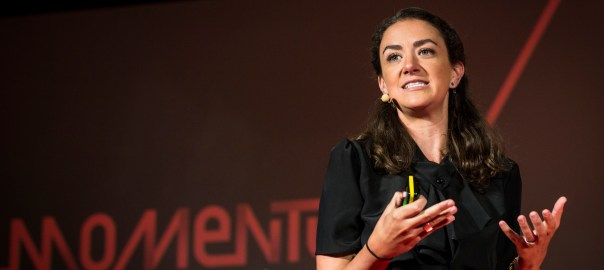
Many of us who read this blog have to give talks. I (Clare) found this list of helpful hints for giving talks fabulous. I so agree with a few of the points: “jargon is death”. How often have you sat through a talk that is a string of jargon and wondered what is he talking about? I was so happy to see “story as queen” on the list. I love hearing stories and when they connect to the findings/research the talk comes alive. I know that the next time I have to give a talk, I will review this list to make sure I do “one kickass thing” and give myself permission to stumble. Enjoy.