Women in Science Speak Out- Using Humor

As my (Cathy’s) daughter is a research scientist and director of a private laboratory, the recent sexist comments by Nobel Prize-winning British scientist, Sir Tim Hunt, was quite a topic of discussion in our home.  Hunt, a biochemist who was a joint recipient of the 2001 Nobel Prize made the offensive remarks while speaking at the World Conference of Science Journalists in South Korea.  Hunt stated that mixed gender laboratories are “trouble” and “”you fall in love with them, they fall in love with you and when you criticize them, they cry”.  According to the BBC, Hunt later apologized for his comments during a phone interview, but then went on to say:

“I did mean the part about having trouble with girls … I have fallen in love with people in the lab and people in the lab have fallen in love with me and it’s very disruptive to the science.”

Hunt’s “retraction” only led to a much stronger public response and initiated his resignation from his honorary post at University College London.  The social media frenzy that followed, particularly through twitter was intriguing.  Female scientists from around the world spearheaded an ironic Twitter campaign to mock Sir Tim Hunt’s sexist comments about the need for single-sex laboratories.  For example, Allison Sekuler, AVP & Dean Grad Studies and Prof of Psychology, Neuroscience & Behaviour @ McMaster University tweeted:

Can’t do any science today because – like all women – I’m too busy making #TimHunt fall in love with me and crying http://www.theguardian.com/science/2015/jun/10/tim-hunt-apologises-comments-trouble-female-scientists …

Archaeologists, biochemists and mathematicians starting posting “distracting ” photographs of themselves at work:

distracting-web-v2


And male scientists demonstrated solidarity by posting new signs in their labs:

CHJXU8HWsAABvdp


It was satisfying for me to see women in science not only display a strong voice, but be able to maintain a sense of humor.  This sense of humor will bode us well as we move forward in our crusade to combat sexism and other forms of oppression in the work place and in education.

http://www.cbc.ca/news/world/tim-hunt-nobel-prize-winning-scientist-resigns-honorary-u-k-post-after-sexist-remarks-1.3108936

http://www.independent.co.uk/news/uk/home-news/distractinglysexy-female-scientists-mock-sir-tim-hunts-sexist-remarks-on-twitter-10313435.html


Favourite Quotes from Literature

spring-flowers-wallpaperflower-wallpaper-background-hd-desktop-widescreenFor my book club I (Clare) had to find some special literary quotes. Huh! Yes that is how I felt too. Well anyway I went searching on the internet and found a few sites that had collections of quotes (organized a zillion different ways – authors, themes …). I know this was cheating (sort of) but the quotes I picked were from authors and books I have read. Here they are:

·      Whatever our souls are made of, his and mine are the same. Emily Bronte (Wuthering Heights)

·      There is a sense in which we are all each other’s consequences. Wallace Stegner

·      For poems are like rainbows: they escape you quickly. Langston Hughes

·      It does not do well to dwell on dreams and forget to live, remember that. J. K. Rowling

·      Let the wild rumpus start. Maurice Sendak

·      Once upon a time there was a boy who loved a girl, and her laughter was a question he wanted to spend his whole life answering. Nicole Krause (The History of Love)

Creating “Legible” Cities

In preparing for the 2015 PanAm games, Toronto is installing new signage to make the city an easier place to navigate. A wayfinding approach is being used which is defined on Wikipedia as: “ the ways in which people and animals orient themselves in physical space and navigate from place to place.” In addition to traditional maps, the wayfinding strategy uses multimodal approaches to make a city more “legible.” Landmarks, new media, public art, and street furniture are examples of ways the wayfinding strategy uses multimodalities. The project is currently being piloted in 21 locations around the Toronto.

Below are examples of Wayfinding signage in cities:

Interactive signage up currently up in Toronto, Canada
publicfurniture
Wayfinding public furniture in a London, U.K. shopping centre.

Brent Raymond, a partner at the design firm responsible for the new signage, commented on in the Globe and Mail on the wayfinding approach:

“It isn’t just about signs. It’s about helping people navigate space. The best examples are always places like airports. People who aren’t familiar with a place at all, they need to be able to find information quickly and feel confident about their environment.”

Read more about this approach to city living here:

http://www.theglobeandmail.com/news/toronto/new-signage-about-to-make-navigating-toronto-on-foot-a-whole-lot-easier/article24951383/

http://www1.toronto.ca/wps/portal/contentonly?vgnextoid=8057524d63f02410VgnVCM10000071d60f89RCRD&vgnextchannel=d90d4074781e1410VgnVCM10000071d60f89RCRD

High School Graduation

We become so entrenched in our own ways of knowing and doing that in order to realize something different we must experience it — with our senses and hearts.  I (Yiola) had the privilege of attending a high school graduation in the USA as a spectator, as a parent. This experience reminded me of the differences across Canadian and American education systems.

The American high school graduation was far different than my Canadian experiences of high school culture. Everything was bigger. East Madison High, with over 400 graduates, held its high school graduation ceremony at the Kohl Centre (oops, Center), which is a huge sports stadium, similar to our Air Canada Centre. There was a choir, and a band, and the speeches were shown on the big screens.  The concession stands were open, there was security at each isle and uncover police were walking among the crowds. I felt like I was at a rock concert.

Much like our ceremony, there were speeches, and songs, and students were called up to the stage and given their certificates. Unlike our ceremony there were speeches given by the school’s Security Guard and school council as opposed to a selected valedictorian.  Really, the cultural context (seems obvious) of the speeches was just different. There was much focus on the sports teams, the arts, and less on academics. There was much talk of community and resilience and less talk of literature, writing, or literacy… although, there was mention of spoken word and some rap embedded in the speeches.

As I sat in the arena at Madison, Wisconsin and looked at the beautifully diverse group of high school graduates I thought about the remarkable work of the students, the teachers, and the scholars of the education community and felt a deep sense of appreciation for their work; a constant movement against the grain of standardization and numeration. I saw individuality immersed in institution. I saw creativity wrapped in convention. I saw hope.

Congratulations to all high school graduates.

graduation sasa

Let’s Not Forget About the Teachers

I (Clare) read this tribute to teachers in the Huffington Post. Lindsay Henry got it right. If you have a minute please send to this a teacher you know – I know that I would not be where I am today if it not for the many teachers who cared about me and worked tirelessly. I bolded a few lines in Henry’s original text.  http://www.huffingtonpost.com/lindsay-henry/this-ones-for-the-teacher_b_7555134.html

This One Is for the Teachers By: Lindsay Henry

It’s graduation season. A time where we focus our eyes and spotlights and applause on the students who successfully pushed through the exams, the essays, the sports games, the drama, to walk across a stage and receive that diploma. To graduate. Finally.

Whew.

So we celebrate. We honor the graduates with parties and families and photos and cake. Lots of cake (preferably with heaps of frosting and rosettes and plastic graduation caps.) We write “Congratulations” on cards and give “How to Succeed in the Real World” books and write “Top 10 Things I Learned When…” blog posts. Of course the graduates deserve the praise and recognition and celebrations and cake and blog posts.

But this post isn’t for the students.

This one’s for the teachers.

This one is for the teachers who stand in front of the students every day, writing on white boards and planning lessons and doing all they can to prepare youth for the rest of their lives. This one’s for the teachers who are full of nerves and anxiety on that first day of class in the fall, then bittersweet sadness as they say goodbye in the spring. The Silent Heroes who put in the work day in and day out, sometimes viewed as the antagonist by the students for assigning those group projects, required readings, difficult tests.

But teachers face their own tests, too. So this one’s for them.

This one is for the teachers who made it through another year full of hurdles. The long days and worrisome nights, the frustrated parents, the conferences. The detentions. The decisions. The reviews. The observations.

This one’s for the teachers that blur the lines because you care so much for these students, as if they are an extension of your own family. The ones that make sure the kids have full bellies and open minds. The ones that are the only constant in some of their students’ lives, filling the void as a caretaker or pseudo parent. The ones that use their own money to pour back into the classroom with materials and books and supplies.

This one’s for the teachers that are so much more than teachers. The ones that are fighters, advocators, listeners, healers, all to reach one more.

This one is for the hard days. The days that are long and the nights are longer, your mind racing and running. The days where teachers feels unsure of themselves, the ones that go home and wonder if they are making a difference, if the lessons are sticking, if they should just pack up the apples on their desks and stop trying.

You matter. The lessons stick. Trust me.

My high school days are long behind me, but the lessons live on and those who taught me. So this one’s for them, too.

This one’s for Mrs. Kochendorfer, my first-grade teacher at Patterson Elementary in St. Charles, Michigan, who’s proud, grinning face is still etched in my memory when I read her “The Rainbow Fish,” just a shy 6-year-old back then with Keds shoes and blunt bangs.

This one’s for Miss Bell, with her huge heart and booming voice shouting throughout my high school hallways: “Practice abstinence!” We laughed with her and loved her because she laughed and loved us first.

This one’s for Mr. Brownlie, with his easy-going manner and button-down shirts and soft-spoken voice. He retired this year, and his dedication and love for his students poured back to him as his former students created a hard covered book thick with pages full stories of how he impacted their lives.

This one’s for the future teachers, the college students in classrooms of their own right now, balancing the act of being a teacher and a student, observing and soaking it all in so they are ready to change lives.

Because that’s what teachers do. They do more than teach. They shape us. They lead us….until we reach the finish line and throw our caps into the hair, grinning at the idea of the future, unsure of what’s next.

But teachers know what’s next: another school year. And so they begin another season of preparation and books and lessons and worries centered around fresh faces sitting in desks.

In this season of mortar caps and gold tassels, Dr. Seuss and “Oh The Places You Go!” lines are repeated as we stare at the backs of the graduates running forward into the so-called real world. But let’s pause for a moment and thank the teachers that helped get them to this point. Because without them — sorry Dr. Seuss — we wouldn’t have a lot of places to go. We would all be a little lost.

Congratulations, students. And congratulations, teachers. You did it. All of you

What is your Munsch favorite?

Yesterday, Robert Munsch turned 70.  If you are not familiar with Robert’s work, he is one of the most famous children’s authors in North America.  Most of his books are delightfully lively and humorous.  Much like a comedian, he likes to take a simple, truthful situation in a child’s life and show the funny side to it. A delightful example of this is his book I Have to Go Pee, which depicts a child getting bundled into a snow suit and then announcing “I have to go pee!”.  His books usually unfold in a pattern that children love to anticipate and participation in.

Beyond his writing style, I love his telling style, as he is a storyteller in the true sense of the word.  He tells stories (like a performance)  and he is very good at it.  I (Cathy) have had the privilege of working with Bob (Robert is his “author” name) several times as I am also a storyteller.  He is a delight to work with. Bob’s background has always intrigued me.  He studied to become a Jesuit priest, but after working in orpahanages and daycare centers, he decided he would rather work with children. After graduating with his Masters in Education, he moved to Canada (he is American) and worked in the preschool at the university of Guelph.  That was where he started telling stories.  People encouraged him to submit the stories he told and he eventually got one published.  The rest, as they say, is history.

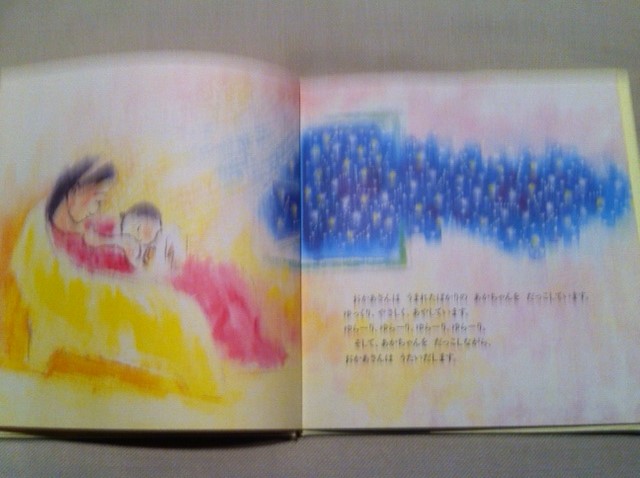
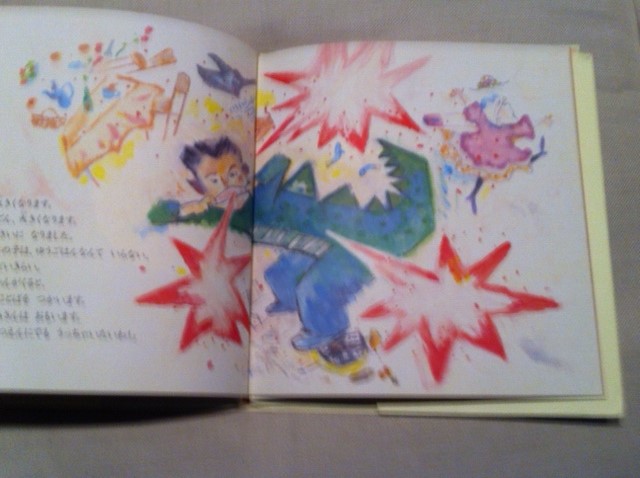
One of Munsch’s best-known books Love You Forever, was listed fourth on the 2001 Publishers Weekly All-Time Best selling Children’s Books selling 6,970,000 copies (not including the 1,049,000 hardcover copies).  In celebration of Bob’s birthday, the cbc  hosted a web page for Bob (link below) on which you can vote for your favorite Munsch book.  I suspect  Love You Forever  will win, as  I personally meet parent and educators worldwide that love that book.  I will also vote for Love You Forever but it is not the American version I love.  It is the Japanese version.  I once hosted an event in my home honoring a group of storytellers that came over from Japan.  Many Canadian storytellers and authors came to the event and, of course, Bob came too.  Graciously, these people gave away copies of their books as welcome gifts to Canada.  As there were about 15 Canadian tellers and authors, Bob just kind of blended in with the crowd, and I knew my foreign guests had no idea who he was or how well known he is.  That is-until they got home and Love You Forever was released in Japan, and became an enormous hit.  One of my guests sent me a copy of the Japanese version and a picture of her and two of her friends taken with Bob.  She was so excited and grateful to have met such an amazing/famous storyteller in person.  Bob, being Bob, would not have thought anything of it. He’s just that kind of person. Below are pictures of the book my guest sent me. I find the illustrations in this version tender and beautiful.  As Bob wrote this story in memory of one of his own children that passed away, I think the illustrations are most appropriate.   That’s my Munsch  favorite.  What’s yours? http://www.cbc.ca/books/munsch70/index.html !cid_E57F0443-35EB-47C7-8284-7385C00597B7!cid_B3FC11F1-450A-4314-8935-0DDC2310E39C!cid_8749C332-F0B7-4526-84F5-FB766894EA18!cid_B5F4DDF3-3F8F-48DE-81B7-B9F779472828

Hip-Hop Ed Fosters Connections

An article in the New York Times highlighted the work of high school English teacher Brian Mooney, who uses the lens of “hip-hop ed” to engage students in the study of complex literary themes. A blog Mr. Mooney created to share his curriculum and student work caught the attention of a broader audience — rapper Kendrick Lamar visited the high school. Students from Mr. Mooney’s English class and the after-school poetry club performed spoken word poems and raps for Kendrick Lamar.

Link to article: http://www.nytimes.com/2015/06/09/nyregion/kendrick-lamar-rapper-who-inspired-a-teacher-visits-a-high-school-that-embraces-his-work.html


Teacher Image in the U.K.

uk

Gillian Harvey from The Telegraph argues for a shift in how teachers are viewed in the U.K. She argues:“[r]ather than heaping initiative upon initiative or effecting more change on a curriculum that is altered almost before it can be implemented, it would be better to take measures to improve the image of the profession as a whole.”

Harvey claims teachers fall victim to a culture of blame in education. Teachers are blamed for many things ranging from unprepared youth for the work force to a failure to raise standards. However, Harvey points out that the government officials often receive credit for perceived successes in education. She comments: “[y]ou can rest assured that the moment improvements happen, the praise will be placed at the doors of Nicky Morgan and David Cameron.”

In an era of educational reform driven by data, teachers are feeling pressure to do what it takes to have the data reflect their “effective” teaching. However, as result, pupils in the classroom may be suffering. Harvey says, “teachers are spending more and more time on meaningless bureaucracy and less on teaching and learning or interacting with pupils.”

An interesting read! To read the entire article click here: http://www.telegraph.co.uk/education/educationopinion/11645808/Does-teaching-have-an-image-problem.html