How was your day? And more inspiring ways to ask Children about school

We know that if we ask children, “How was your day?” Often we will hear the response “Fine”… or if we ask “What did you do at school today?” Often we will hear the ever so painful response “nothing”.

I (Yiola) came across this list of questions to ask children as a way to stimulate conversation about their schooling experience. I will be sharing this list with my student teachers this year as I find it to be a helpful tool to share with parents.

1) What was the best thing that happened at school today? (What was the worst thing that happened at school today?)

2. Tell me something that made you laugh today.

3. If you could choose, who would you like to sit by in class? (Who would you NOT want to sit by in class? Why?)

4. Where is the coolest place at the school?

5. Tell me a weird word that you heard today. (Or something weird that someone said.)

6. If I called your teacher tonight, what would she tell me about you?

7. How did you help somebody today?

8. How did somebody help you today?

9. Tell me one thing that you learned today.

10. When were you the happiest today?

11. When were you bored today?

12. If an alien spaceship came to your class and beamed someone up, who would you want them to take?

13. Who would you like to play with at recess that you’ve never played with before?

14. Tell me something good that happened today.

15. What word did your teacher say most today?

16. What do you think you should do/learn more of at school?

17. What do you think you should do/learn less of at school?

18. Who in your class do you think you could be nicer to?

19. Where do you play the most at recess?

20. Who is the funniest person in your class? Why is he/she so funny?

21. What was your favorite part of lunch?

22. If you got to be the teacher tomorrow, what would you do?

23. Is there anyone in your class who needs a time-out?

24. If you could switch seats with anyone in the class, who would you trade with? Why?

25. Tell me about three different times you used your pencil today at school.

*****

The list came from: http://www.huffingtonpost.com/liz-evans/25-ways-to-ask-your-kids-so-how-was-school-today-without-asking-them-so-how-was-school-today_b_5738338.html

Researchers in the area of parenting and parent involvement have offered the same advice to parents for speaking to their children about school.

http://www.theglobeandmail.com/life/parenting/back-to-school/how-to-help-your-kids-succeed-in-school-talk-talk-talk/article4524102/

A is for Activist: Guest Blog by Gisela Wajskop

The school year began in Canada at the same time we experienced many human tragedies across the world. In this peace-less world, I’ve (Gisela) A is for Activistdiscovered, by chance, an interesting book for young children: A is for Activist by Innosanto Nagara, http://www.aisforactivist.com. From Activist to Zapatista, this “children’s book for the 99 percent” offers different rhymes and perspectives to small children.

The book is described as:

Activist is an ABC board book written and illustrated for the next generation of progressives: families who want their kids to grow up in a space that is unapologetic about activism, environmental justice, civil rights, LGBTQ rights, and everything else that activists believe in and fight for. The alliteration, rhyming, and vibrant illustrations make the book exciting for children, while the issues it brings up resonate with their parents’ values of community, equality, and justice. This engaging little book carries huge messages as it inspires hope for the future, and calls children to action while teaching them a love for books. http://www.amazon.ca/Activist-Innosanto-Nagara-ebook/dp/B00DIGNCNU/ref=srA is for _1_1?ie=UTF8&qid=1410614592&sr=8-1&keywords=Innosanto+Nagara

As Corey Hill wrote in 2012 (http://www.yesmagazine.org/people power/in-review-it-is-for-activist-by-innosanto-nagara) “It’s pretty clear from page one that this is no Cat in the Hat. Billed as a book for the children of the 99%, A is for Activist is the radical vision of Innosanto (Inno) Nagara, a graphic designer and social justice activist from Oakland, California.

Although the book is said to suitable for children from birth to three years to age I wonder about the impact of reading it to such young children, and I wonder if it would be better suited for older children who have ideological knowledge and experience. The illustrations are gorgeous and the rhymes reveal ideas about the rights of all in the hope of a world more with fewer ills. It is a lovely text to start the school year in which conflicts and wars in the four corners of the world threaten children around the world! It can serve as introductory material to literacy and can serve as an inspiration to parents and educators about the social function of writing and literature for children.

Summer of Jodi Picoult

I (Cathy) often listen to novels (on my ipod mini) as a series by one author. By doing this I can get very familiar with an author’s style, recurring themes and track her/his growth as a writer. This summer was Jodi Picoult.

Jodi Picoult Jodi Picoult

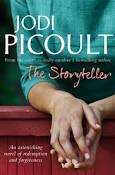
So far I have listened to 8 novels: The Pact, Perfect Match, Vanishing Act, The Storyteller, House Rules, Lone Wolf, Nineteen Minutes, and Sing You Home. I discovered she often writes about trials. She also tends to write from several points of view in each novel. I particularly liked this trait with the trial books, because I could ‘hear’ the perspectives of both the defense and the prosecution. Sometimes she uses one character in two books, which I also enjoyed.

Her strength, however, is her ability to tackle issues. She excels at them. Big, messy ones. (She wrote My Sisters Keeper, which became a popular movie starring Cameron Diaz and Alec Baldwin). The novel I just finished, Nineteen Minutes, was about a bullied high school student that decided to fight back by shooting several students in his school. It was graphic and disturbing, but portrayed with sensitivity and realism. The issues she portrayed in the trail bothered me so much, I found myself describing scenes to my husband and asking his opinion on them. I was emotionally snagged. I view this as a sign of an excellent writer. My favourite book of the 8, was The Storyteller, but it also was, at times, hard to listen to. A holocaust story, it was brutally realistic and very emotional.

I recommend her work as a wonderful resource for a book club, especially if you like a good discussion about polarized views and moral dilemmas. She has a new one coming out in October, Leaving Time, which I plan to order and buy a hard copy for my daughter. She is a big Jodi Picoult fan and started me on this series. After this, I haven’t decided which author to tackle next. Any recommendations?

storytellerninetten minutes

Meet Generation Z: Guest Blog Monica McGlynn-Stewart

http://www.slideshare.net/sparksandhoney/generation-z-final-june-17?utm_source=slideshow&utm_medium=ssemail&utm_campaign=weekly_digest

Monica McGlynn-StewartAs post-secondary programs get up and running this fall, a new generation will be entering our classrooms- Generation Z. The oldest of this generation is turning 18 this year and the youngest are 8. According to this fascinating collection of statistics available on Slideshare, they are either the opposite or extreme versions of Generation Y. They have lots of disposable income, like to shop online, and use 60% less illicit substances than those just a few years older. These kids grew up in the shadow of 9/11 and 60% want to positively impact the world. As educators it is important for us to know that they appear to be more resourceful, collaborative, and more self-directed than Millennials. They use the Internet and social media for research and are comfortable multi-tasking across five screens. They can process more information at faster speeds than ever before. However, it can be difficult to get and keep their attention and their speedy processing is sometimes at the expense of precision or depth of understanding. It is hard to slow them down as they suffer from FOMO (fear of missing out)! How can I (Monica) embrace their skills and perspectives and engage them so that I can support them in their goal of creating a better world?

Independent Reading

This Washington Post article features former school principal Joanne Yatvin’s thoughts on why it is important to provide students with the opportunity to self-select texts and to have designated time in the school day for independent reading. Yatvin notes that in many US schools the practice of independent reading “has been abandoned in favor of systematic programs that promise to raise student test scores.” Link to article: www.washingtonpost.com/blogs/answer-sheet/wp/2014/09/08/why-kids-should-choose-their-own-books-to-read-in-school

What are your thoughts — do you consider independent reading to be an important part of a literacy program?

OliverJeffers

The Interactive Resume

I have never seen something like this before, so I thought I would share it! If any of you are familiar with the Mario Brothers games, this interactive resume will seem very familiar to you. I had so much fun “reading” this resume! 

http://www.rleonardi.com/interactive-resume/

digresume

A hard cold truth about teaching and teachers at Canadian universities

An article I (Yiola) came across on Canadian news, the CBC.

http://www.cbc.ca/news/canada/most-university-undergrads-now-taught-by-poorly-paid-part-timers-1.2756024

The increasing numbers of contract employees in academia is not new. We have known for quite some time that many faculty members, usually teaching faculty, have part-time contract positions.

The organizational process to hire well-qualified academic faculty as part-time and contract employees is complex and has many implications:

– funding: it seems universities receive little funding for the renewal or development of permanent or tenure stream faculty and other resources

– work/life conditions for contract faculty:  the article describes the challenges contract faculty experience both at work and in their personal lives (low wages, job instability, heavy workloads)

– culture/work environment: the tensions between tenure and non-tenure, permanent and contract, faculty

– quality of teaching: with the aforementioned stresses placed on teaching and teachers at the university, is there an effect on the quality of teaching?

Clare and Clive have explored and written on the topic. For example:

Kosnik, C., & Beck, C. (2008). In the shadows: Non-tenure-line instructors in preservice teacher education. European Journal of Teacher Education, 31(2), 185-202.

Beck, C., & Kosnik, C. (2003). Contract staff in preservice teacher education. Teaching Education, 14(2), 187-200.

The article speak to all faculties and departments across the university. This holds true for teacher education as well. Upon reading the article and listening to the interview http://www.cbc.ca/news/class-struggle-1.2756899   I cannot help but feel sad for the state of teaching and learning at the University level.  University teachers deserve better… students deserve better.


Don’t Walk, Run to Buy Berliner and Glass’s New Book: 50 Myths and Lies that Threaten America’s Public Schools

This August, David Berliner and Gene Glass published the book 50 Myths and Lies that Threaten America’s Public Schools: The Real Crisis in Education (Teachers College Press, NY). I (Clive) just read a review of it by Paul Hood in Education Review, a publication of the National Education Policy Center.

It is one of those books you wish you had written but is so important you’re glad (and relieved) someone else wrote it, now. It will be a huge shot in the arm for attempts to defend public education against the trend toward standardization, top-down control, and even dismantling. While the book is about U.S. schooling, it struck me in reading the review that the same arguments apply to public schooling in other countries. We have often exaggerated the difference between the achievements/challenges of schooling in the U.S. and elsewhere.

According to the review, James Popham’s back-cover blurb about the book is as follows:

“What do you get when two world-class scholars and a team of talented analysts take a hard look at 50 widely held yet unsound beliefs about U.S. public schools? Well, in this instance you get a flat-out masterpiece that, by persuasively blending argument and evidence, blasts those beliefs into oblivion. Required reading? You bet!”

As Popham notes, the authors enlisted the help of a whole team of academics to write on the various myths, thus adding greatly to the depth and accuracy of the analysis. Taking such a step speaks to the judgment, humility, and public concern of these outstanding individuals. I for one wish to thank them for what they have done – and am running to buy the book!

European Conference on Educational Research

PortoClive and I (Clare) are at the European Conference on Educational Research in Porto Portugal. This is an amazing conference which brings together educational researchers from around the world. Network 10 which focuses on teacher education research is a truly wonderful community. Clive and I are doing a few papers. Below are the papers and powerpoints for our presentations:

Clare – Reconceptualizing Their Teaching Over Time: Goals and Pedagogies of Mid- and Later-Career Literacy/English Teacher Educators
EERA2014-Beyond TransitionPaper_PDEdits
ECER2014Mid+LaterPedagogy

Clare – Four Spheres of Knowledge Required: An International Study of the Professional Development of Literacy/English Teacher Educators
ECER 2014 – 4 Spheres
ECER2014LTE+PD

Clive – Teacher Inquiry as Research and Knowledge Generation
ECER2014CB Tchr Inquiry

Back to School

school

I (Cathy) have always loved the end of summer. I love the change in the temperature, the lush ripe tomatoes, and most of all, the start of a new year at school. There is an excitement to it- like New Years- full of potential and possibilities. Plus, the tasks I have been performing,  provided me with a sense of order and purpose.   I’ve reviewed notes from last year on changes I want to make for this year; prepared class lists, syllabi, and power points.  I sorted the art supplies, pulled books, and looked up newer resources. I also looked up a few quotes to start the year off…fireSingle bowl of healthy organic basmati rice.quote

Today is my first day of teaching.  I feel ready.  Hope you do too.  Have a great year!