Monthly Archives: September 2014

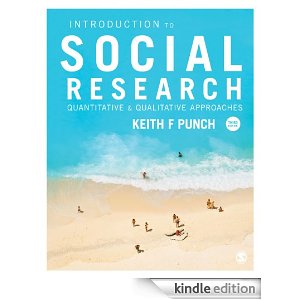
Introduction to Social Research: Quantitative and Qualitative Approaches by Keith Punch

If you looking for an outstanding book on conducting research you might want to consider Keith Punch’s new book, Introduction to Social Research: Quantitative and Qualitative Approaches. Keith has lonKeith Punchg been a leader in research methodology – his in-depth knowledge, his accessible writing style, his concise descriptions, and his realistic approach make his work outstanding. I (Clare) have found his work very helpful. You might find his chapter on grounded theory very useful. Below is a review of the book and here is the link:
http://www.amazon.ca/Introduction-Social-Research-Quantitative-Qualitative-ebook/dp/B00JIVFZGG/ref=sr_1_1?ie=UTF8&qid=1411018834&sr=8-1&keywords=keith+punch

This is a beautifully understated and highly accessible book. It focuses on the issues and practicalities of doing social scientific research, introducing a wide range of methods and approaches to get students thinking and a project underway. This new edition has been thoroughly updated, and there are welcome new chapters on theory, literature searching, research ethics and the internet. The book is authoritative and will be well used by students and teachers of social science research methods. — Amanda Coffey, Professor 20131007 Comprehensive, thoroughgoing and well organised, Punch’s book has a deservedly high reputation among social science researchers. This third edition, with new material on literature searching, ethics, theory and the Internet makes it a must-have for students and professional researchers alike. — Gary Thomas, Professor of Inclusion and Diversity 20131007 In this work, Keith Punch covers all the essentials of social science research with clarity and an obvious command of the subject matter. His coverage of quantitative and qualitative methods from design through to collection and analysis offers breadth and depth perfect for any undergraduate attempting to navigate the research world. I look forward to putting a copy of this latest edition on my shelf and recommending it students. — Dr Zina O’Leary, Unit of Study Coordinator, 20131007 This 3rd edition provides an accessible yet comprehensive and detailed framework for understanding social research. The clear layout with chapter objectives and summary questions offers a robust and practical learning structure for students which guides them through both theoretical and methodological approaches to contemporary research. No research methods course should be without it!! — Dr. Emma Bond, Deputy Director 20131007 All in all, this book is incredibly well structured and free from jargon and over complication. It is a joy to read, and it guides the reader step-by-step towards understanding what social research is all about. — Dr Sophie Lecheler LSE Book Reviews Website

A Strong Tradition of Inuit Oral History

This month Parks Canada announced the discovery of one of the lost ships from Sir John Franklin’s Arctic expedition. The two ships from the Franklin expedition, HMS Erebus and HMS Terror, and their crews disappeared during a search for the Northwest Passage in 1846. Recent sonar images from the waters of Victoria Strait, just off King William Island in Nunavut, revealed the wreckage of a ship on the ocean floor.

The discovery of the Franklin ship demonstrates the strength and reliability of Inuit oral history. For more than 30 years local historian Louie Kamookak has been interviewing elders to collect the stories about the Franklin expedition. According to Inuit oral history the two ships appeared on the northwest side of King William Island. One of the ships was crushed in ice and the other ship floated further south. The Parks Canada team may not have discovered the Franklin ship without Inuit knowledge and the strong tradition of Inuit oral history. Kamookak noted, “for us Inuit it means that oral history is very strong in knowledge, not only for searching for Franklin’s ships but also for environment and other issues.”

www.cbc.ca/m/news/canada/north/franklin-find-proves-inuit-oral-history-is-strong-louie-kamookak-1.2761362

FranklinShip

Get ‘er Done

While preparing for my (Cathy’s)class on assessment and evaluation, I came across this video.  I loved it. The title of this excerpt is Toxic Grading Practices, but I have re-titled it  “Get ‘er Done”, for this blog post in honor of a terrific line Dr. Doug Reeves  uses in his presentation.  The reason I found this video in the first place, was in answer to a question one of my student teachers posed in class.  She asked, “What should we do  if our students simply will not do the work assigned?”   Dr. Reeves suggestions are both refreshing and amusing.  It makes for a great conversation about accountability.  Just follow the link…

https://www.youtube.com/watch?v=jduiAnm-O3w

How was your day? And more inspiring ways to ask Children about school

We know that if we ask children, “How was your day?” Often we will hear the response “Fine”… or if we ask “What did you do at school today?” Often we will hear the ever so painful response “nothing”.

I (Yiola) came across this list of questions to ask children as a way to stimulate conversation about their schooling experience. I will be sharing this list with my student teachers this year as I find it to be a helpful tool to share with parents.

1) What was the best thing that happened at school today? (What was the worst thing that happened at school today?)

2. Tell me something that made you laugh today.

3. If you could choose, who would you like to sit by in class? (Who would you NOT want to sit by in class? Why?)

4. Where is the coolest place at the school?

5. Tell me a weird word that you heard today. (Or something weird that someone said.)

6. If I called your teacher tonight, what would she tell me about you?

7. How did you help somebody today?

8. How did somebody help you today?

9. Tell me one thing that you learned today.

10. When were you the happiest today?

11. When were you bored today?

12. If an alien spaceship came to your class and beamed someone up, who would you want them to take?

13. Who would you like to play with at recess that you’ve never played with before?

14. Tell me something good that happened today.

15. What word did your teacher say most today?

16. What do you think you should do/learn more of at school?

17. What do you think you should do/learn less of at school?

18. Who in your class do you think you could be nicer to?

19. Where do you play the most at recess?

20. Who is the funniest person in your class? Why is he/she so funny?

21. What was your favorite part of lunch?

22. If you got to be the teacher tomorrow, what would you do?

23. Is there anyone in your class who needs a time-out?

24. If you could switch seats with anyone in the class, who would you trade with? Why?

25. Tell me about three different times you used your pencil today at school.

*****

The list came from: http://www.huffingtonpost.com/liz-evans/25-ways-to-ask-your-kids-so-how-was-school-today-without-asking-them-so-how-was-school-today_b_5738338.html

Researchers in the area of parenting and parent involvement have offered the same advice to parents for speaking to their children about school.

http://www.theglobeandmail.com/life/parenting/back-to-school/how-to-help-your-kids-succeed-in-school-talk-talk-talk/article4524102/

A is for Activist: Guest Blog by Gisela Wajskop

The school year began in Canada at the same time we experienced many human tragedies across the world. In this peace-less world, I’ve (Gisela) A is for Activistdiscovered, by chance, an interesting book for young children: A is for Activist by Innosanto Nagara, http://www.aisforactivist.com. From Activist to Zapatista, this “children’s book for the 99 percent” offers different rhymes and perspectives to small children.

The book is described as:

Activist is an ABC board book written and illustrated for the next generation of progressives: families who want their kids to grow up in a space that is unapologetic about activism, environmental justice, civil rights, LGBTQ rights, and everything else that activists believe in and fight for. The alliteration, rhyming, and vibrant illustrations make the book exciting for children, while the issues it brings up resonate with their parents’ values of community, equality, and justice. This engaging little book carries huge messages as it inspires hope for the future, and calls children to action while teaching them a love for books. http://www.amazon.ca/Activist-Innosanto-Nagara-ebook/dp/B00DIGNCNU/ref=srA is for _1_1?ie=UTF8&qid=1410614592&sr=8-1&keywords=Innosanto+Nagara

As Corey Hill wrote in 2012 (http://www.yesmagazine.org/people power/in-review-it-is-for-activist-by-innosanto-nagara) “It’s pretty clear from page one that this is no Cat in the Hat. Billed as a book for the children of the 99%, A is for Activist is the radical vision of Innosanto (Inno) Nagara, a graphic designer and social justice activist from Oakland, California.

Although the book is said to suitable for children from birth to three years to age I wonder about the impact of reading it to such young children, and I wonder if it would be better suited for older children who have ideological knowledge and experience. The illustrations are gorgeous and the rhymes reveal ideas about the rights of all in the hope of a world more with fewer ills. It is a lovely text to start the school year in which conflicts and wars in the four corners of the world threaten children around the world! It can serve as introductory material to literacy and can serve as an inspiration to parents and educators about the social function of writing and literature for children.

Summer of Jodi Picoult

I (Cathy) often listen to novels (on my ipod mini) as a series by one author. By doing this I can get very familiar with an author’s style, recurring themes and track her/his growth as a writer. This summer was Jodi Picoult.

Jodi Picoult Jodi Picoult

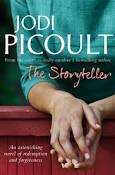
So far I have listened to 8 novels: The Pact, Perfect Match, Vanishing Act, The Storyteller, House Rules, Lone Wolf, Nineteen Minutes, and Sing You Home. I discovered she often writes about trials. She also tends to write from several points of view in each novel. I particularly liked this trait with the trial books, because I could ‘hear’ the perspectives of both the defense and the prosecution. Sometimes she uses one character in two books, which I also enjoyed.

Her strength, however, is her ability to tackle issues. She excels at them. Big, messy ones. (She wrote My Sisters Keeper, which became a popular movie starring Cameron Diaz and Alec Baldwin). The novel I just finished, Nineteen Minutes, was about a bullied high school student that decided to fight back by shooting several students in his school. It was graphic and disturbing, but portrayed with sensitivity and realism. The issues she portrayed in the trail bothered me so much, I found myself describing scenes to my husband and asking his opinion on them. I was emotionally snagged. I view this as a sign of an excellent writer. My favourite book of the 8, was The Storyteller, but it also was, at times, hard to listen to. A holocaust story, it was brutally realistic and very emotional.

I recommend her work as a wonderful resource for a book club, especially if you like a good discussion about polarized views and moral dilemmas. She has a new one coming out in October, Leaving Time, which I plan to order and buy a hard copy for my daughter. She is a big Jodi Picoult fan and started me on this series. After this, I haven’t decided which author to tackle next. Any recommendations?

storytellerninetten minutes

Meet Generation Z: Guest Blog Monica McGlynn-Stewart

http://www.slideshare.net/sparksandhoney/generation-z-final-june-17?utm_source=slideshow&utm_medium=ssemail&utm_campaign=weekly_digest

Monica McGlynn-StewartAs post-secondary programs get up and running this fall, a new generation will be entering our classrooms- Generation Z. The oldest of this generation is turning 18 this year and the youngest are 8. According to this fascinating collection of statistics available on Slideshare, they are either the opposite or extreme versions of Generation Y. They have lots of disposable income, like to shop online, and use 60% less illicit substances than those just a few years older. These kids grew up in the shadow of 9/11 and 60% want to positively impact the world. As educators it is important for us to know that they appear to be more resourceful, collaborative, and more self-directed than Millennials. They use the Internet and social media for research and are comfortable multi-tasking across five screens. They can process more information at faster speeds than ever before. However, it can be difficult to get and keep their attention and their speedy processing is sometimes at the expense of precision or depth of understanding. It is hard to slow them down as they suffer from FOMO (fear of missing out)! How can I (Monica) embrace their skills and perspectives and engage them so that I can support them in their goal of creating a better world?

Independent Reading

This Washington Post article features former school principal Joanne Yatvin’s thoughts on why it is important to provide students with the opportunity to self-select texts and to have designated time in the school day for independent reading. Yatvin notes that in many US schools the practice of independent reading “has been abandoned in favor of systematic programs that promise to raise student test scores.” Link to article: www.washingtonpost.com/blogs/answer-sheet/wp/2014/09/08/why-kids-should-choose-their-own-books-to-read-in-school

What are your thoughts — do you consider independent reading to be an important part of a literacy program?

OliverJeffers

The Interactive Resume

I have never seen something like this before, so I thought I would share it! If any of you are familiar with the Mario Brothers games, this interactive resume will seem very familiar to you. I had so much fun “reading” this resume! 

http://www.rleonardi.com/interactive-resume/

digresume

A hard cold truth about teaching and teachers at Canadian universities

An article I (Yiola) came across on Canadian news, the CBC.

http://www.cbc.ca/news/canada/most-university-undergrads-now-taught-by-poorly-paid-part-timers-1.2756024

The increasing numbers of contract employees in academia is not new. We have known for quite some time that many faculty members, usually teaching faculty, have part-time contract positions.

The organizational process to hire well-qualified academic faculty as part-time and contract employees is complex and has many implications:

– funding: it seems universities receive little funding for the renewal or development of permanent or tenure stream faculty and other resources

– work/life conditions for contract faculty:  the article describes the challenges contract faculty experience both at work and in their personal lives (low wages, job instability, heavy workloads)

– culture/work environment: the tensions between tenure and non-tenure, permanent and contract, faculty

– quality of teaching: with the aforementioned stresses placed on teaching and teachers at the university, is there an effect on the quality of teaching?

Clare and Clive have explored and written on the topic. For example:

Kosnik, C., & Beck, C. (2008). In the shadows: Non-tenure-line instructors in preservice teacher education. European Journal of Teacher Education, 31(2), 185-202.

Beck, C., & Kosnik, C. (2003). Contract staff in preservice teacher education. Teaching Education, 14(2), 187-200.

The article speak to all faculties and departments across the university. This holds true for teacher education as well. Upon reading the article and listening to the interview http://www.cbc.ca/news/class-struggle-1.2756899   I cannot help but feel sad for the state of teaching and learning at the University level.  University teachers deserve better… students deserve better.