All posts by poojadharamshi

The Triple Focus

I (Pooja) came across a new book I am interested in reading , so I thought I’d share it with our blog community. The new book by Daniel Goleman and Peter Senge is entitled The Triple Focus: A New Approach to Education (2014) and makes a case that education should focus on three things:

  1. Self-awareness
  2. Empathy
  3. Understanding our relationship with the larger world

Triple-Focus-Cover1-300x300

This focus on self, other, and world in the classroom is something I am particularly interested in as I feel it is increasingingly necessary in today’s classrooms. Daniel Goleman explains:

 These skill sets interact very naturally. We feel that this complete inner tool kit should be a part of every child’s learning as the world they are growing into becomes more distracted, relationships more besieged, and everything more interconnected and complex.


Below is an excerpt from the new book:

Empathy and Academic Success

The key to compassion is being predisposed to help — and that can be learned.

There is an active school movement in character education and teaching ethics. But I don’t think it’s enough to have children just learn about ethical virtuosity, because we need to embody our ethical beliefs by acting on them. This begins with empathy.

There are three main kinds of empathy, each involving distinct sets of brain circuits. The first is cognitive empathy: understanding how other people see the world and how they think about it, and understanding their perspectives and mental models. This lets us put what we have to say in ways the other person will best understand.

The second is emotional empathy, a brain-to-brain linkage that gives us an instant inner sense of how the other person feels — sensing their emotions from moment to moment. This allows “chemistry” in our connections with people.

Those two are very important of course; they’re key to getting along with other people, but they’re not necessarily sufficient for caring. The third is called, technically,empathic concern — which naturally leads to empathic action.Unlike the other two kinds of empathy, this variety is based in the ancient mammalian circuitry for caring and for parenting, and it nurtures those qualities.

Read more at:

http://www.huffingtonpost.com/dan-goleman/triple-focus-excerpt_b_5638646.html?1407243583

A Book on Critical Literacy and Teacher Education

I (Pooja) am currently re-reading Negotiating critical literacies with teachers: Theoretical foundations and pedagogical resources for pre-service and in-service contexts (Vasquez, V.M., Tate, S.L, & Harste, J.C., 2013). This book suggests a theoretical framework, provides insightful examples, and offers pedagogical resources when incorporating critical literacy practices into pre-service and in-service teacher education.

I share some moments in the book which really stood out for me during my second reading:

1. Vasquez et al. suggest this book fills a gap in the literature about critical literacy and teacher education. Specifically,

 This book speaks to what Dozier et al. (2006) observe as a profession that has not publicly articulated the nature of the alignment between our expectations for our [teacher educators’] own literate lives and our expectations for our students as literacy learners.

 2. As I was more closely re-reading the final chapter of this text, a section on “Dealing with Accountability and Standards” really stood out for me. This section dealt what our critical literacy participants in our SSHRC study have expressed to be a tension in their work. Vasquez et al. (2013) take the following stance on dealing with accountability and standards as teacher educators,

A question that often arises for us is how to get beyond the hurdles of incorporating a critical stance when we live in a world of accountability and standards….we have found that these difficulties become easier with teachers who have a concrete philosophy about their pedagogy and can demonstrate how this type of pedagogy has changed their own academic and personal lives as well as that of their students.

3. They go on to provide insights into how best practice critical literacy in teacher education,

We have also found that you cannot do this work alone. Having other to think with and reflect with, even if they are not in your workplace makes all the difference in whether you continue to create more and more spaces for critical literacy in your setting or whether you throw in the towel.

“Too Fast For the Truth”

This made me (Pooja) laugh.  A New York Times Article from 1858 wonders if transatlantic telegraphs were necessary, or “too fast for the truth?”

“Superficial, sudden, unsifted,” is how news via telegraph were described in this article. Sound familiar!? I guess the more things change,  the more they stay the same.

telegraph2


Read Adrienne Lafrance’s article on the evolution of communication mediums here:

http://www.theatlantic.com/technology/archive/2014/07/in-1858-people-said-the-telegraph-was-too-fast-for-the-truth/375171/

Building New Habits

I (Pooja) am always looks for new strategies to build good habits (and break bad ones). An article by James Clear in Business Insider visually represents a few strategies for building new habits. I find these images to be simple yet effective as a daily reminder. They are already on my fridge 🙂

Here are two I particularly liked. To see the rest click on the link below.

Increase your habit in very small ways.

Success is a few simple disciplines, practiced every day; while failure is simply a few errors in judgment, repeated every day. —Jim Rohn

tiny-gains

When you slip, get back on track quickly.

The best way to improve your self-control is to see how and why you lose control.
—Kelly McGonigal

never-miss-twice

Read the entire article here:

http://www.businessinsider.com/how-to-successfully-build-a-new-habit-2014-7?utm_content=bufferc2d44&utm_medium=social&utm_source=facebook.com&utm_campaign=buffer


Re-blog: Reflections on the Words of J. Krishnamurti

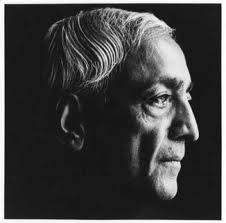
One of my(Pooja) dearest friends  recently started her own blog: www.edumodels.ca. Roopa and I have been best friends for almost twenty years. We are both educators and can discuss our views on education for hours on end. Her most recent post was so beautiful, I decided to re-blog it here. She reflects on book written by  J. Krishnamurti (philosopher/educator): Education and the Significance of Life. I have not yet read this text, but after reading Roopa’s blog post, it is at the top of my reading list.krish

 Below is an excerpt from Roopa’s blog:

 Taking an important step (leap!) back, Krishnamurti pushes us to think fundamentally about the purpose of education, and focuses on the importance of self-knowledge and individual freedom. In a chapter on “The Right Kind of Education” he expands:

 The purpose of education is to cultivate right relationship, not only between individuals, but also between the individual and society; and that is why it is essential that education should, above all, help the individual to understand his/her own psychological process. Intelligence lies in understanding oneself and going above and beyond oneself.

 In addressing the danger of setting ideals for children (whether in educational institutions, or as parents), and in conditioning them, Krishnamurti makes his views clear:

 The right kind of education consists in understanding the child without imposing upon her an ideal of what we think she should be. To enclose her in the framework of an ideal is to encourage her to conform, which breeds fear and produces in her the constant conflict between what she is and what she should be; and all inward conflicts have their outward manifestations in society.. If a child lies for example, of what value is it to put before her the ideal of truth? One has to find out why she is telling lies. To help the child, one has to take time to study and observe her, which demands patience, love and care.

 Krishnamurti’s emphasis on the primary importance of self-understanding; the secondary importance of technique and profession; and the understanding of the individual child, all resonate very strongly with me. In practice, I’m curious as to how this plays out at the Krishnamurti schools; and I will follow up with a post on the schooling Krishnamurti called for later this week!

To read Roopa’s entire blog post as well as her previous posts, click below:

http://www.edumodels.ca/blog/education-and-the-significance-of-life

Focus on Teaching the Student

As I continue to read the news about states exiting the Common Core standards to reclaim standard-setting autonomy, I am reminded of a quote from a participant from our SSHRC study on literacy teacher educators:

“You’re teaching the student. You’re not teaching the curriculum. The student should be in the middle and to try to stretch the curriculum to fit around that.” (Melissa)

 The Common Core Standards are national U.S. standards for English Language Arts and Mathematics grades K-12. The implementation of these standards began in 2011. However, in the past few months three states have formally withdrawn from the Common Core Standards (Indiana, Oklahoma, and South Carolina). Recently, Governor Bobby Jindal of Louisiana made public that he was also looking to formally withdraw from the Common Core Standards.

This turbulent time in the implementation of national standards reminds me of the stance several of our literacy teacher educators had on teaching directly to national mandates.  Several had lived through many curricula, and so tended to veer away from explicitly teaching the curriculum. Rather, they emphasized with their student teachers that the focus should always be on the student.

Below is a chart summarizing U.S. resisting the implementation of the Common Core:

commoncoreparticipation

Source:

http://dailysignal.com/2014/06/19/want-bobby-jindal-pulls-louisiana-common-core/

Happy Canada Day!!!

Happy Canada Day!

Today, Canada is 147 years old! 

happy canada day

Some fun facts about Canada(#5 is my favourite!):

1. Canada holds the record for the most gold medals ever won at the Winter Olympics, since taking 14 Golds at the 2010 Vancouver Winter Olympics.

2. There are nearly 2.5 million caribou in Canada.

3.  Canada is  home to the longest street in the world. Yonge Street in Ontario starts at Lake Ontario, and runs north through Ontario to the Minnesota border, a distance of almost 2000 kilometres.

4. There are more doughnut shops in Canada per capita than any other country.

5.  A bear cub named Winnipeg was exported from Canada to the London Zoo in 1915. A little boy named Christopher Robin Milne loved to visit Winnipeg (or Winnie for short) and his love for the bear cub inspired the stories written by his father, A.A. Milne, about Winnie-the-Pooh.


Fun facts provided courtesy of:

http://www.1stcontact.com/blog/social/funstuff-social/20-interesting-facts-canada/

http://www.hikebiketravel.com/18950/145-weird-fun-interesting-facts-canada/


Google Doodles for FIFA World Cup 2014

Google’s daily doodles tend to put a smile on my (Pooja) face, as I suppose they are intended to do. The past eight days of Google’s doodles have been dedicated to the FIFA World Cup being hosted in Brazil.  To keep pace with the  World Cup, the doodles have been changing multiple times a day to reflect in real time what is happening in Brazil.

Google doodles are usually created in California, U.S.A. However, this is the first time doodles are being created outside of the U.S.A.: “[A] handful of the team’s 17 members are reacting almost in real time to games, results and events happening in the 12  World Cup venues.” (http://gadgets.ndtv.com/internet/news/google-doodles-go-international-with-fifa-world-cup-2014-544758)

Doodles are usually made months in advance, but to keep the doodles relevant they are being created only hours before we see them. The doodle team leader, Ryan Germick, stated:

 This has never been done in real time response, there is not really an event so singular where the whole world is watching. The fact is that this is a singular sport, one game is on at a time and the whole world is fixated on one match and so it is a chance to be part of the dialogue. The part we are celebrating is that the whole world comes together.

 Here are stills of my favourite Google doodles so far: 

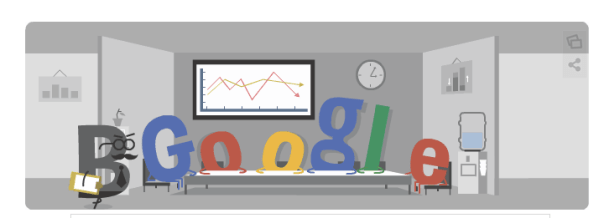
Today’s doodle was a familiar scene for many people working in offices all around the world:

Screen Shot 2014-06-23 at 9.17.09 PM

Screen Shot 2014-06-23 at 9.17.28 PM


This doodle is set in Rio De Janeiro’s favelas. The “L” from Google is kicking the soccer ball around by itself:

Screen Shot 2014-06-22 at 1.57.54 PM


This doodle was featured on the first day of the World Cup. This moving doodle featured many of Rio de Janeiro’s famous sites:

Screen Shot 2014-06-22 at 2.03.34 PM


Rescue Time

Self tracking applications (e.g. Fitbit, Sleep Cycle, Moodpanda, MyFitnessPal) have gained much popularity over the past few years. People want to track how many calories they are consuming; how many steps they are taking; how many hours of deep sleep they are getting.

I was recently introduced to another self-tracking application, Rescue Time. This application monitors your computer and tracks usages such as hours spent on e-mail, hours spent writing, and hours spent on facebook (too many!) According to their website (https://www.rescuetime.com), Rescue Time believes their application can help you be the most efficient with your time:

Image taken from Rescue Time's website
Image taken from Rescue Time’s website (https://www.rescuetime.com)

On one hand, with so many possible distractions at play while working, I see that Rescue Time could be a useful tracking tool. However, on the other hand, I wonder if Rescue Time could add to my already long list of possible distractions!?

Has anyone used this application? What have been your experiences? I would love to hear from you!

International Symposium on Literacy/English Teacher Education: A Focus on Digital Technology

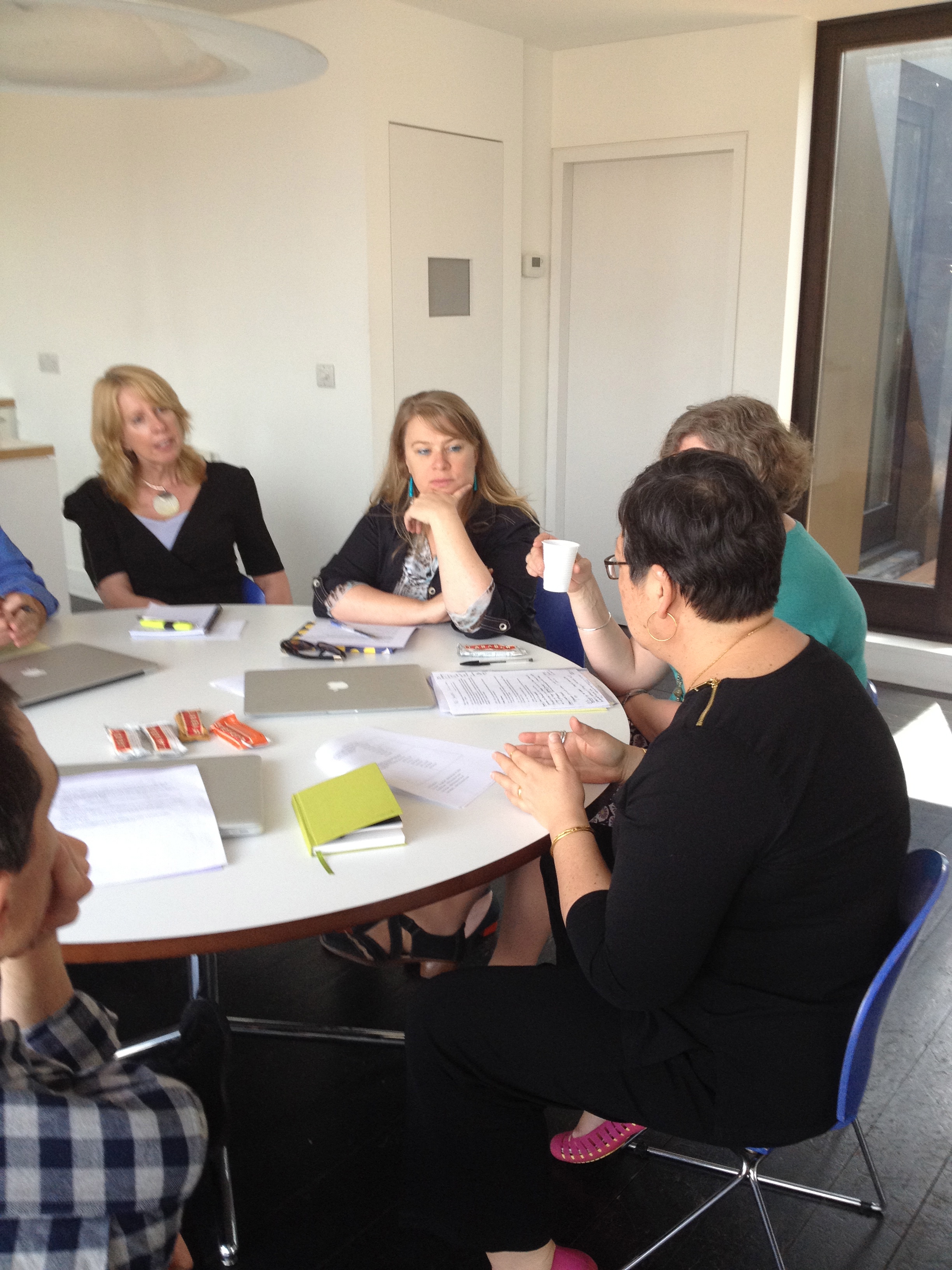
With the symposium a few days behind us, I (Pooja) have had some time to reflect on what was discussed in London, England. Clare wrote a reflection post on day one of the symposium (https://literacyteaching.net/2014/06/06/symposium-day-1-reflections/), so I want to reflect a bit on day two. Day two started off with mini-presentations which asked presenters to focus on a central question: What is happening with digital technology in your context?

IMG_2564

Shawn Bullock, assistant professor at Simon Fraser University, raised some interesting issues related to digital technology and education:

  • Technological Determinism: A theory which asserts we need to stay current with technology to stay relevant in society; technology determines cultural values and society’s structures
  • Digital Publics: The theory that the nature of public space has changed significantly over the past years. The nature of public space has gone from persistent to replicable to searchable in the past few decades:

o   Persistent- recording (video, audio) events changed the nature of public space;

o   Replicable- recordings became replicable;

o   Searchable- today we can search for any recording

(danah boyd)

Understanding how the nature of public space has drastically changed over the years, Shawn posed an important question to the group: What is the role of education in theorizing privacy in the digital age?

IMG_2582

As the symposium was coming to a close, we were guided to reflect on the past two days. Many people realized that the rapid increase of standardization and data driven initiatives was happening across all contexts. However, many individuals commented that the conversations over the past two days were “energizing.” Being in conversation about big issues across international contexts made many teacher educators realize they were not alone. In fact, many commented they wanted to keep up the momentum by further collaborating and “making some noise” in teacher education.


IMG_2617


Once again, we’d like to thank TUG Agency for so graciously hosting us. TUG provided a vibrant and exciting atmosphere for our symposium to take place. Check out their website at: http://www.tugagency.com

Thank you!!!