Category Archives: Conferences

Australia Here We Come

Clive and I are off to Australia today. The impetus for the trip was an invitation to speak at the Australian Teacher Education Clive with Aussie flagAssociation Conference in Darwin. The trip then mushroomed to include visiting Clive’s family in Perth, Sydney, and Melbourne. He has lots of family!

Being in education I have long been an admirer of many Australian educators:

  • Mem Fox (children’s books)
  • First Steps (literacy program)
  • Keith Punch (research methodology)
  • John Loughran (pedagogy of teacher education)
  • Robyn Ewing (Master of Teaching program at the University of Sydney)
  • Neil Selwyn (digital technology)

And I love Tim Tams (best cookies) and the new Australian TV series A Place to Call Home (a potboiler of an evening drama).

Tim TamsSo while we are on the road we hope to do some blogs about our adventures.Image Place to Call Home

Videos Now Available: Experts Speaking about Teacher Education

Last year I (Clare) received a grant for the project: Rethinking Literacy Teacher Education for the Digital Era: Teacher Educators, Literacy Educators, and Digital Technology Experts Working Together. One of the main activities of the project was to bring together 16 experts from three fields and 4 countries (Canada, US, UK, and Australia) to address the following questions.
• How is our understanding of literacy evolving in light of the new ways we communicate?
• How can literacy/English teacher educators (LTEs) prepare student teachers to develop and implement literacy programs that capitalize on digital technology (DT)?
• What teacher education curriculum changes are required to better prepare future teachers to integrate technology in their own teaching?
• What professional learning support do LTEs need to develop courses that will integrate and make greater use of DT?

We held a Symposium in London England in June. Click on the link https://literacyteaching.net/connection-grant/ for more info on the Symposium and for some photos.

At the Symposium we interviewed the participants which we video taped. These videos are now available. They are incredibly interesting, informative, and short. Teacher educators can use these in their courses/presentations. Click on  https://literacyteaching.net/IMG_2599 (the box to the right of this post). I want to bring your attention to the first video which is of Bethan Marshall from King’s College London. She addresses:

First video: A key insight she has had about education

Second video: Recommendation to improve teacher education

Enjoy!

10 things your child’s teacher wants to say to you

I (Clare) came across this “open letter” to parents by by Lyndsi Frandsen which I found very interesting. As many schools gear up for Curriculum Night where teachers meet the parents of their students for the first time, I thought this article very relevant. As teachers we so often are misunderstood.Below is the full letter and here is a link to the website>

http://www.ksl.com/?nid=1009&sid=31768239#h1KcVQ2c2uGwgOcx.01

SALT LAKE CITY — Teachers can be a misunderstood breed. A lot of times we find ourselves taking the blame for anything and everything. Your child failed a test? Blame the teacher. Your child got pushed down on the playground? Blame the teacher. You’re having a bad hair day? Blame the teacher.

But have you ever thought about what your child’s teacher would say if the teacher could speak openly and honestly, without any backlash? I interviewed dozens of my fellow teachers and colleagues. Using their comments, I compiled what I hope will be a helpful list of suggestions to improve the parent-teacher dynamic.

Now, before you call an emergency neighborhood meeting and start writing “1,000 things parents wish they could say to their child’s idiotic teacher,” take a step back. Give these teachers the benefit of the doubt, and know the educators who weighed in on this are wonderfully talented, kind, educated, adoring teachers who love what they do.

(On a side note: As I was reaching out to teachers, I felt like I should title this “The help: teacher edition.” It took a lot of coaxing and reassurance in order to get them to talk.)

“Thank you for sharing your child with me each day. … Thank you for trusting me with your most prized possessions. Thank you for helping me create the “magic” that is learning, educating and inspiring.”

1. I can’t do it alone

I am here to tell you that whatever is accomplished during the long school day can be completely undone in just a few hours at home. I am only human. I can’t snap my fingers and get your child to the target reading level. Will I try my hardest? Yes. Will I ever stop trying? No. But if you aren’t actively engaging with your child and reinforcing learning at home, you are robbing your child of opportunities otherwise. I am giving your child the best hours of my day. Please be willing to give your child minutes of your day to spend on homework, reading, etc.

2. I never stop thinking about your child

Even when I am finally home and able to focus on my own little ones, I am still thinking about yours. I am constantly thinking about how to help them overcome educational barriers. I am continuously brainstorming how I can cater to their various learning styles. But it doesn’t end there. I lose sleep thinking about the much-too-heavy-burdens of life their tiny shoulders carry around. I worry about their future and the scary world they will grow up in. I love them fiercely and they are always on my mind.

3. Yes, I am saying your child is lying

I am an adult. I am not a mean, petty, immature teenager who makes up rumors to make your child look bad. If I tell you your child called a classmate a name — then your child did. If I tell you your child refused to complete work — then your child did. Please believe the 30-year-old adult and not your 8-year-old child.

4. We are all cheering for the same team

I know this may come as a surprise to you, but I am not the enemy. Like you, I love your child. Like you, most days I invest more time and money in the children, than I do in myself. Like you, I want what’s best for them. So, when you feel tempted to tell me all the reasons why I treat your child unfairly, or am out to get your child, please remember that. When I hold your child accountable, I’m not treating your child unfairly. When I challenge your child academically, I am not out to get your child. The end.

5. We really don’t think every child needs medication

One teacher (and mother) I talked to learned this lesson firsthand. After her own child was diagnosed with a processing disorder, she realized he just might need medication to help him focus. It was a hard fact to swallow: that the medication she had been so against was the missing piece of the puzzle. Her words: “You would not consider keeping a child from their asthma medication because it would change who they are, so why would you consider keeping a child from medicine that would help them to be their best self?

Medication is not a death sentence. It does not mean that they are dumb or out of control. It does not mean they are ‘one of those kids.’ ” Teachers observe every type of child on a daily basis. Being receptive to their observations and opinions just may pay off for your child. Parents need to advocate for their children. Sometimes, they don’t know how or where to begin. And that’s where we come in.

6. The way you speak about education directly influences your child’s opinion

If you place great value on learning, your children will. If you speak kindly about their teacher, they will. If you tell them they have test anxiety, they will. If you treat school as a chore, they will. If you have high expectations for them, they will.

7. Your child doesn’t have any friends because he is unkind

I understand this isn’t a fact 100 percent of the time. But generally speaking, if your child is kind, compassionate and friendly, then other children will want to be your child’s friend. Funny how that works, isn’t it? It is your responsibility to teach your child how to be a good friend. If your children are hearing you gossip, belittle and exclude others, chances are they will be the same kind of friend you are.

8. It’s OK to let your child struggle

This is how we learn and grow. I understand your overwhelming desire to intervene at the drop of a hat. I understand it is hard to watch your child go through hard things and sometimes fail. I don’t like to watch your child struggle either. But if we do everything for them, they will never be able to do anything for themselves.

9. Your appreciation goes a long way

We don’t want you to feel bad for us. We chose this profession, and if we could go back and do it again … we would be doctors. Just kidding. We would do it all over again. Teachers just want to feel valued and appreciated. Our payoff (clearly) doesn’t come in the form of a check. It comes with watching your child grow and develop a love of learning. Parents who express their gratitude underestimate how far that really goes. So, write a thank-you note every now and again, tell us what a good job we are doing, and spoil the living daylights out of us during teacher appreciation week. (Kidding … sort of.)

10. Thank you

A well-known teacher that has a wonderful reputation with students, parents and colleagues said it perfectly:

“Thank you for sharing your child with me each day. Thank you for taking an interest in what he/she is doing. Thank you for caring about your child enough to let them fail from time to time, but being there to pick them up, brush them off, and help them grow from the experience. Thank you for investing time in your child. It is the most valuable gift you can give them. Thank you for taking time away from your phone or your computer to really be there for them. Thank you for teaching your child responsibility. Thank you for helping them realize that the choices they make are their choices and the consequences, good or bad, are not because of someone else. Thank you for letting me be a part of the ‘village’ that gets to help raise your child. Thank you for the opportunity I get to make a difference in their life. Thank you for trusting me with your most prized possessions. Thank you for helping me create the “magic” that is learning, educating and inspiring.”

Lyndsi Frandsen is the creator of the Facebook page For All Momkind and author of the For All Momkind blog. She has many titles, including wife, kindergarten teacher, sister and her favorite title, Mom.

European Conference on Educational Research

PortoClive and I (Clare) are at the European Conference on Educational Research in Porto Portugal. This is an amazing conference which brings together educational researchers from around the world. Network 10 which focuses on teacher education research is a truly wonderful community. Clive and I are doing a few papers. Below are the papers and powerpoints for our presentations:

Clare – Reconceptualizing Their Teaching Over Time: Goals and Pedagogies of Mid- and Later-Career Literacy/English Teacher Educators
EERA2014-Beyond TransitionPaper_PDEdits
ECER2014Mid+LaterPedagogy

Clare – Four Spheres of Knowledge Required: An International Study of the Professional Development of Literacy/English Teacher Educators
ECER 2014 – 4 Spheres
ECER2014LTE+PD

Clive – Teacher Inquiry as Research and Knowledge Generation
ECER2014CB Tchr Inquiry

Exploring a Vision of Teaching with Japanese Student Teachers

bn_comeon_onFor many years, I (Clive) have had a connection with Kobe Shinwa Women’s University in Kobe, Japan. https://www.kobe-shinwa.ac.jp

The University has just established an International Education Research Center with a global perspective and I was asked to be a visiting scholar there. On Thursday I returned from a brief visit, having given lectures and engaged in discussions about our SSHRC longitudinal study of teachers and its implications for teacher education.Kobe Shinwa

On Tuesday I conducted two classes with second year students. We discussed the growing sense of expertise among the teachers in our study, their decision-making about which topics to emphasize and how to teach them, their increasing emphasis on integration and individualization, and their search for a degree of work-life balance so they could “survive and thrive” as teachers and be a role model for their students.

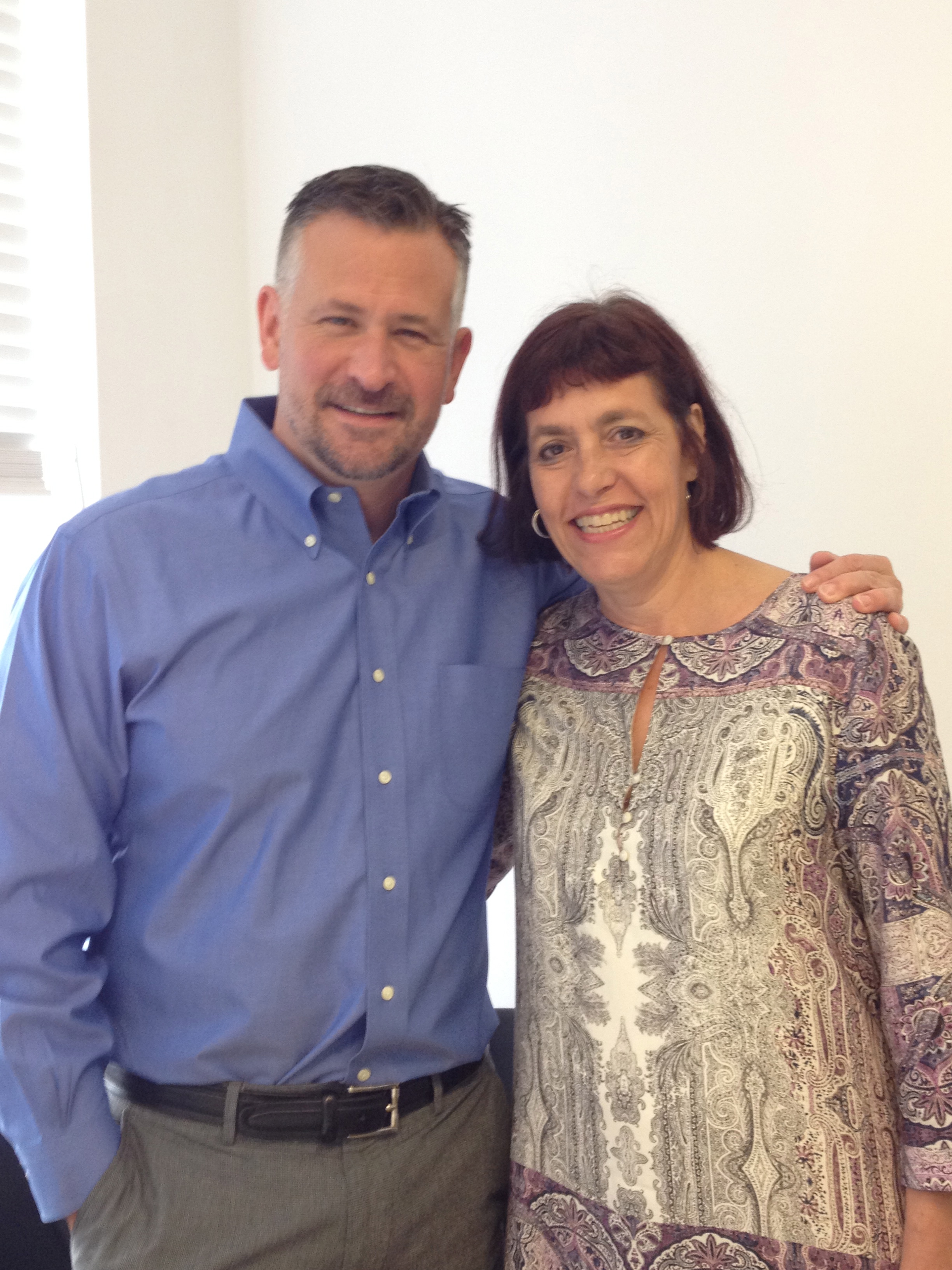
Clive BeckDespite the constraints of the national examination system, the student teachers were very interested in these ideas and seemed keen to explore them during their pre-service program and subsequently. They felt there was some room for flexibility within the system and they should begin during their preparation program to figure out how to take advantage of this flexibility as much as possible.

Kobe Shinwa Women’s University has an outstanding reputation for teacher education at the elementary level and a high proportion of their graduates get jobs immediately. This encourages the teacher candidates to think deeply about pedagogy because they have a good chance of having a classroom of their own in the near future.

The Future is Here: Social Media in the 21st Century

Tug AgencyOur Symposium was held at Tug Agency http://www.tugagency.com
Founded by Nick Beck Tug Agency is “a search marketing led agency, specialising in pay per click
advertising, biddable display, search engine optimisation, affiliates and 
social media marketing.” (If this is a new world to you, definitely check out their website.)

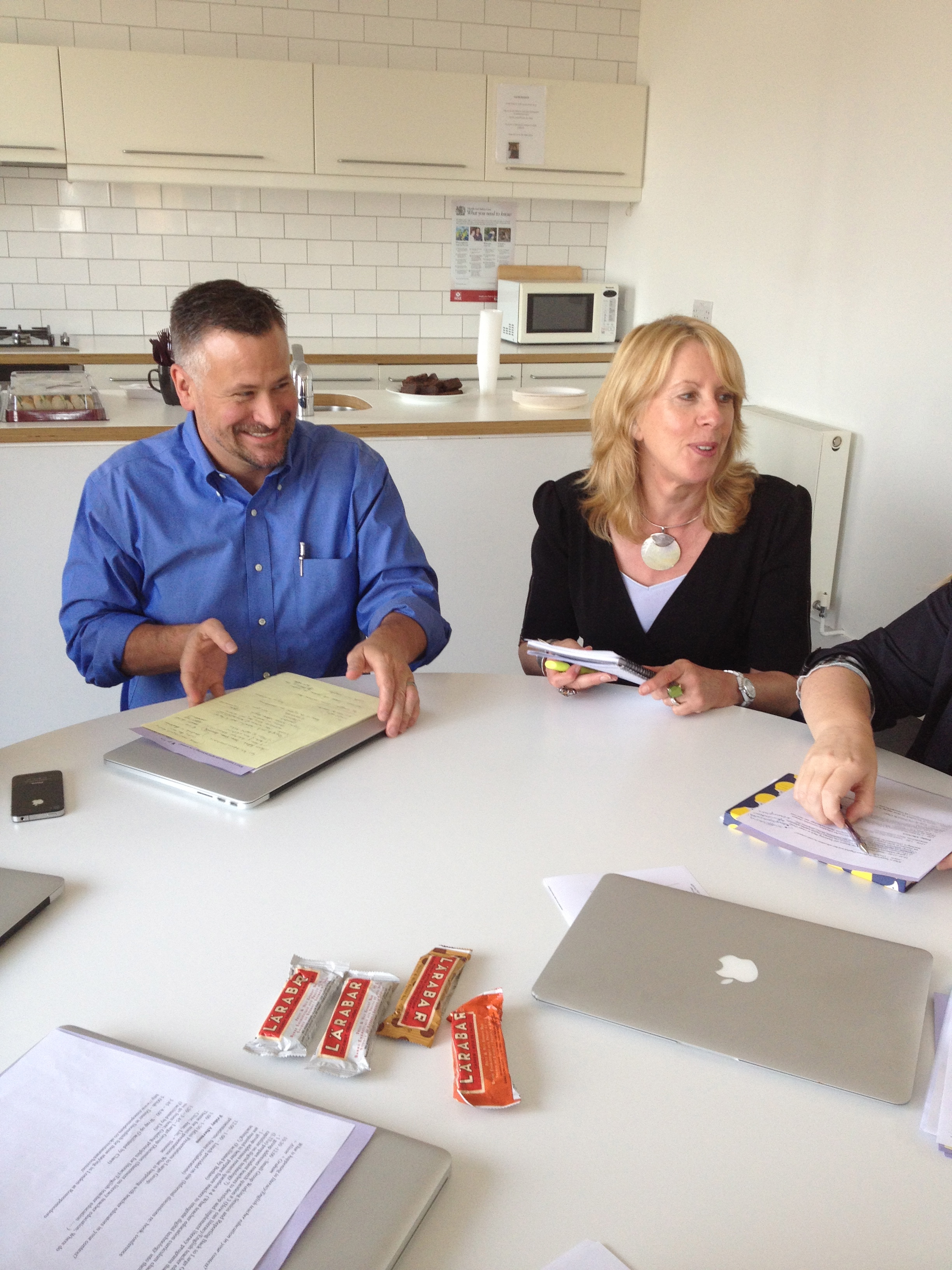
A HUGE benefit of having the Symposium at Tug was the opportunity Nick Beckto interact with some of the amazing staff. Nick found time to join our informal discussions on digital technology and teacher education. Luckily, two of his staff who specialize in social media found time to discuss their work with us. Eoin O’Neil and Simon Jenkins talked about “how” social media “works,” how search engines can use our past searches to “predict” what we might look at next, the complex formulas used by companies to identify patterns, and so on. Hearing from experts on the power and use of social media contributed to our discussion on place of digital technology in teacher education. Nick, Eoin, and Simon clearly showed that the “future is here” and we need very tech-savvy teachers who understand being digital citizens and the place of digital technology in education. We definitely made connections between teacher education and search engine optimization!

Please note that under the Connection Grant tab I (Clare) have added a photoarray from the Symposium; some of the ppt presentations; and some scholarly articles. More to follow.

Our Symposium: A Model for Teacher Educator and Policy Development

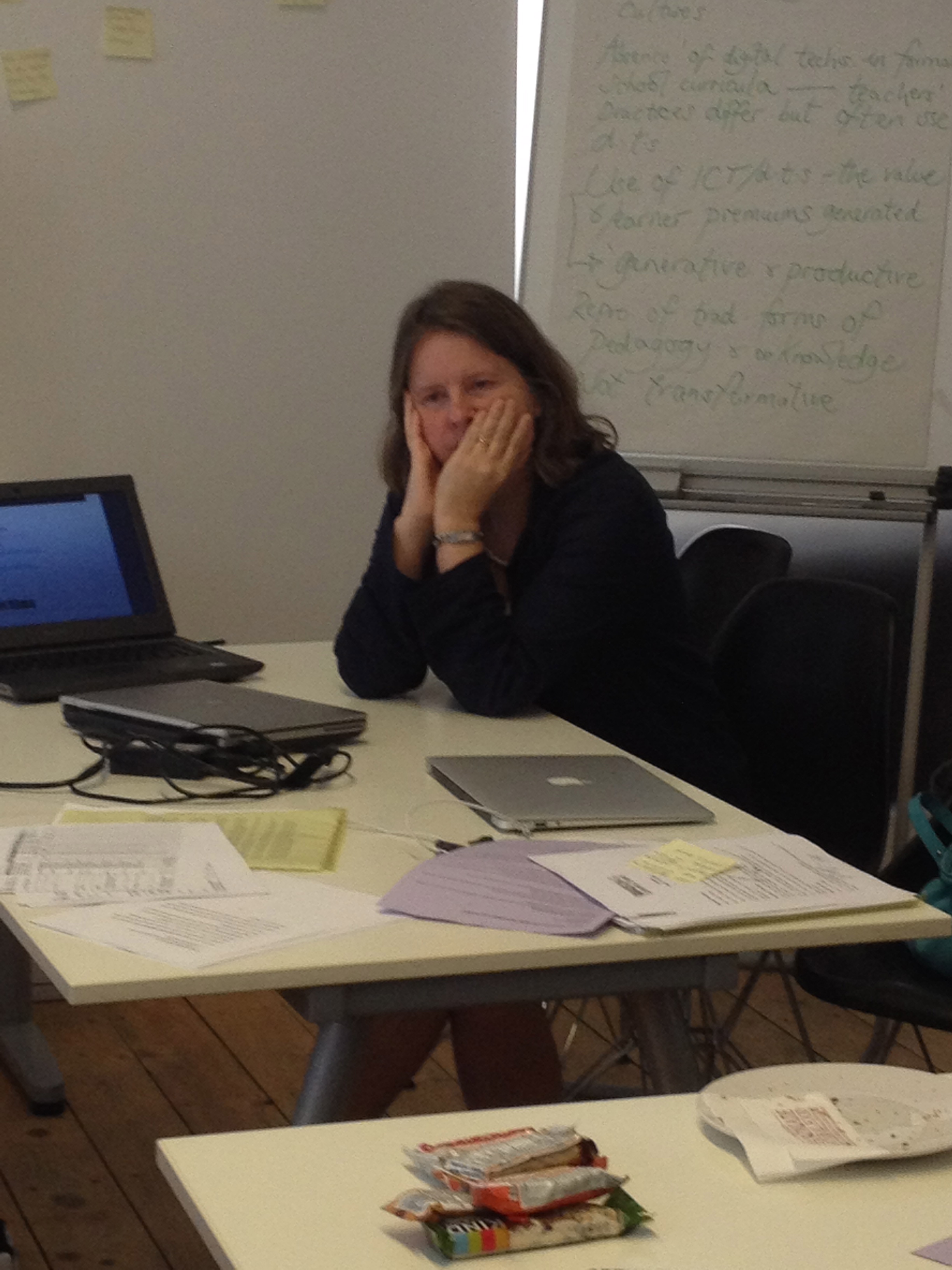
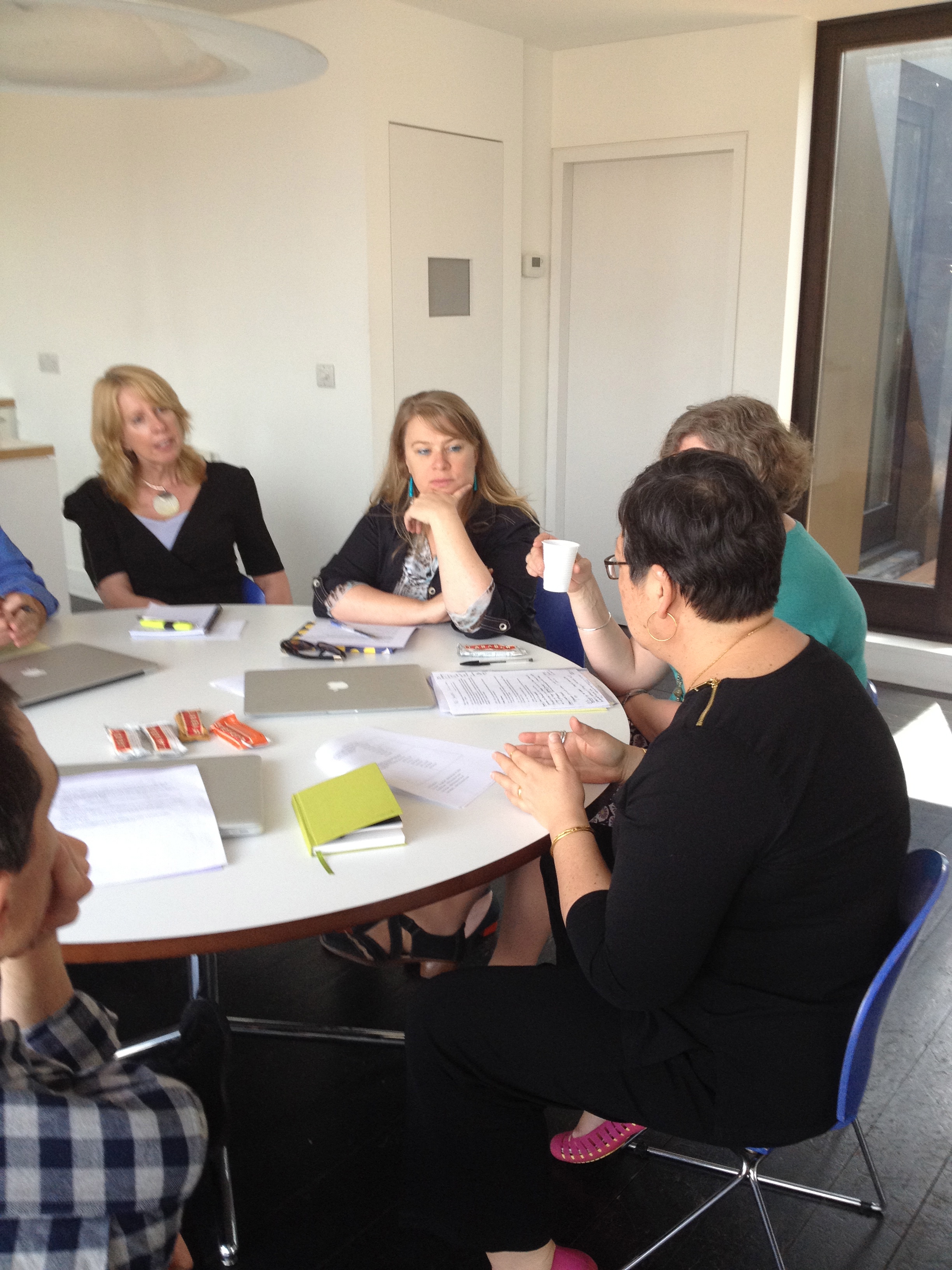
Clare Kosnik and Peter WilliamsonOur Symposium was amazing. For those who have read the blog postsIMG_2609 about it, I (Clare) am sure you got the sense that it was very interesting and productive. One of the words I would use to describe it is dynamic. There was such enthusiasm to discuss and grapple with the issues that we moved so beyond where we started (how to integrate digital technology into teacher education). Given that most people did not know each other, came from different countries, and had different areas of specialization (digital technology, teacher educators, teachers, policy) these differences did not divide us but they somehow brought us together to form a community. Not wanting to sound sentimental or superficial, I feel that something “magical” happened at the Symposium. The barriers melted away instantly and learning happened. Jean Murray’s “speed dating” opening activity immediately got us talking to each other. The laughter as we discovered interesting facts each other (e.g., John was fired as a gravedigger) raised the noise level to a crescendo. From there the Symposium developed into a committed group of educators focused on learning.Participants

Lin GoodwinThe two-day event was not like anything I have never experienced in my life – there was no posturing, there was careful listening, comments were relevant, questions were thoughtfully phrased, and there was commitment to something larger than individual research agendas. The interactions were respectful and genuine. I had assumed we would learn much about each other’s research and national contexts, I did not think that we would become a little community of teacher educators looking at the larger questions of education within a changing world. The level of enthusiasm was still sky high at the end of two intense days. There was no rush to leave or end the discussion.

Alyson BakerSo often in academia, department meetings are monopolized by issues such as timetabling. Conferences presentations are often more monologues that discussion. We need time to talk about the issues. The structure of the Symposium worked well – mini presentations by each person and time for large and small group discussion. This Connection Grant was not extravagant – we did it on a shoe-string budget. A number of universities contributed small amounts and we stretched our dollars. Given the money spent on university and government-based initiatives there is money for these kinds of events. Governments and universities need to spend their money thoughtfully and carefully – I would say, let’s use our Symposium as a Graham Parr and Scott Bulfinmodel of professional development for teacher educators and for policy development – bring the researchers together, devise a format for sharing and discussion, and let them proceed. I suspect the guidelines for education that they develop will be sensible and feasible.
Pooja Dharamshi Securing the grant and organizing the logistics were demanding. Our challenge now is to build on what we built and experienced. It is not just that I have much to learn from the amazing colleagues at the Symposium, but I also know that we are much stronger as a group. Teacher education is under siege. Individuals cannot resolve the challenges we face in teacher education but as a group perhaps we can do “something.” There has never been greater need to work together. I feel gratified — all of the work was so worth it. Thank you to the 16 participants who made this unique experience one I will never forget. I am eager to continue our collaborations. This website and blog will provide updates on our continued work together.

Standards and Standardization in Teaching and Teacher Education

Clive BeckAs the participants in the symposium talked about the state of teacher education in our 4 countries, I (Clive) was dismayed at the rapid movement toward requiring everyone (teachers and teacher educators) to teach the same things in the same way.
The cartoon about requiring all animals – elephants, monkeys, birds, fish, etc. – to climb the same tree kept coming to mind. This is madness. In the real world, not only are people different but we need them to be different because of the diverse tasks that have to be performed.
But it’IMG_2598s problematic to publicly describe standardization as madness, since conservatives have presented their position in terms of raising or maintaining standards, and we may be seen as being soft on standards.

Two strategies have occurred to me: One is to fly under the radar, teaching in a rich and individualized way while also implementing “standards.” We have to learn to DO BOTH, as much as possible.
The other strategy is to develop and publicize the argument – noted above – that diversity is needed in all walks of life, and a society that doesn’t “let a hundred flowers bloom” will not prosper. I don’t think we have been vocal and persistent enough in pressing this Clive and Nickpoint.
Tug Agency http://www.tugagency.com was a fabulous place to hold the Symposium. The Tug Team are an example of very talented people who have gone far beyond the “standards” of education. They are very able and very creative — what can we learn from them about how to make education relevant and engaging?


Reflecting on my time at the International Symposium for Digital Technology and Literacy/English Teacher Education

I (Lydia) feel fortunate to have had the opportunity to participate in the symposium last week as many of the issues raised resonated with my current research examining student teachers’ experiences with contemporary literacy teaching and learning. The issues highlighted during the individual presentations and accompanying discussions offered rich insights into the status of teacher educational internationally.

IMG_2590

I’d like to share a few of the questions raised during the symposium that remained with me and will continue to inform my research in literacy teacher education: What should a curriculum of contemporary teacher education include? In what ways can a curriculum of teacher education provide the space and quality time necessary for student teachers to truly engage as learners? How does power continue to operate in the curriculum? How do digital tools and social media spaces construct reading and writing? What do these digital spaces permit and what do they restrict? How is knowledge constructed, represented, and distributed within digital spaces? What are the pedagogical consequences as students engage with different modes within digital spaces? These are just a few of the questions I continue to consider upon my return from the symposium. Having the opportunity to consider the complexities and issues relevant to teacher education with international scholars was truly inspiring. I look forward to continuing our rich conversations.

IMG_2560

International Symposium on Literacy/English Teacher Education: A Focus on Digital Technology

With the symposium a few days behind us, I (Pooja) have had some time to reflect on what was discussed in London, England. Clare wrote a reflection post on day one of the symposium (https://literacyteaching.net/2014/06/06/symposium-day-1-reflections/), so I want to reflect a bit on day two. Day two started off with mini-presentations which asked presenters to focus on a central question: What is happening with digital technology in your context?

IMG_2564

Shawn Bullock, assistant professor at Simon Fraser University, raised some interesting issues related to digital technology and education:

  • Technological Determinism: A theory which asserts we need to stay current with technology to stay relevant in society; technology determines cultural values and society’s structures
  • Digital Publics: The theory that the nature of public space has changed significantly over the past years. The nature of public space has gone from persistent to replicable to searchable in the past few decades:

o   Persistent- recording (video, audio) events changed the nature of public space;

o   Replicable- recordings became replicable;

o   Searchable- today we can search for any recording

(danah boyd)

Understanding how the nature of public space has drastically changed over the years, Shawn posed an important question to the group: What is the role of education in theorizing privacy in the digital age?

IMG_2582

As the symposium was coming to a close, we were guided to reflect on the past two days. Many people realized that the rapid increase of standardization and data driven initiatives was happening across all contexts. However, many individuals commented that the conversations over the past two days were “energizing.” Being in conversation about big issues across international contexts made many teacher educators realize they were not alone. In fact, many commented they wanted to keep up the momentum by further collaborating and “making some noise” in teacher education.


IMG_2617


Once again, we’d like to thank TUG Agency for so graciously hosting us. TUG provided a vibrant and exciting atmosphere for our symposium to take place. Check out their website at: http://www.tugagency.com

Thank you!!!