Category Archives: classroom teachers

Longitudinal Study of Teacher Continues: Multiliteracies Teaching in a Digital Age: Balancing the Old and the New

Clive and ClareClive and I (Clare) along with our amazing research team (many of whom have posted blogs) having been following 40 teachers, some for 10 years and others for 8 years. This has been incredibly rewarding research because we have seen how teachers change over time. In Growing as a teacher: Goals and pathways

Growing as a Teacher book cover
Growing as a Teacher

of ongoing teacher learning we reported on their first 8 years of teaching. We are VERY happy to report that we have received funding from the Social Sciences and Humanities Research Council of Canada (SSHRC) to continue our research for another five years. The title of our proposal was: Multiliteracies Teaching in a Digital Age: Balancing the Old and the New. Click here to see the Description of Research that we submitted to SSHRC. Final Detailed Description 2014We could not have conducted this research without the work of our research team and the cooperation of the teachers. We look forward to seeing how our teachers change and develop as mid-career to later-career teachers.

Embracing the Backchannel

The backchannel is the conversation that goes on alongside the primary activity, presentation, or discussion in your classroom. Victor Yngve first used the phrase back channel” in 1970, in a  linguistic context, referring to how people communicate back and forth alongside a conversation.  I (Cathy) have recently started using TodaysMeet as a backchannel chat platform to help me redirect the constant distractions or backchannel discussions in the classroom, especially, the digital ones. Have you ever been frustrated by the frequent use of digital devices (i.e. digital phones, computers, tablets) in your classroom that are not related to your lesson?  This tool may help.  I use TodaysMeet to help me harness the backchannel and redirect it onto a platform that can enable new activities and discussions.  My students are invited, through a link, into a “room” much like a chat room. I then project this “room” onto my screen for all to see.  As I progress through my lesson, questions and comments about the lesson are posted by the students through their own computers or other devices.

Below are a list of benefits from using backchannel tools in your classroom.

  1. Shy/introverted students are given a place to ask questions and contribute to conversations.
  2. Students who process information by asking a lot of questions can ask an unlimited amount of questions without dominating the classroom conversation. Everyone can see their questions and you can choose when to address their questions.
  3. Gauge students’ interest in and or prior knowledge of a topic.
  4. Extend your classroom conversations beyond the time in your school’s schedule. If you have started a backchannel during a classroom conversation and it’s going well you don’t have to worry about running out of time because you can have students continue the dialogue later in the day.
  5. Gauge the effectiveness of an activity in real time, by having students share questions and comments during an activity
  6. Conduct formative assessment by asking students about their understanding of a topic and gauging the responses

From :  http://www.freetech4teachers.com/2013/06/5-benefits-of-using-backchannels in.html#.VRAQv-E01q8

Other backchannel platforms include: Socrative, Padlet, and BluePulse. And, yes, tweeting on the same hash tag, during an event, is also a form of backchannelling. To obtain a comprehensive guide on harnessing the backchannel, follow the URL below: http://www.freetech4teachers.com/2013/09/backchannels.html#.VRAXx-E01q8

todaysmeet

But we already DO this at the Laboratory School: Learning from Leaders

Building on Clive’s post from yesterday I (yiola) want to extend the discussion on inquiry- based pedagogy and its many high-level thinking practices. Question posing, experiential learning, researching, sharing, collaborating, exploring, imagining, experimenting — these are but some of the qualities you will find in inquiry-based classrooms. Problem-based and play-based (some use the terms interchangeably) do too.  And, these are the practices that I see being used daily at the Laboratory School here in downtown Toronto. It is good practice. Students are empowered, responsible, creative thinkers. They are also happy when they learn. It is good to read then that the Finnish system is moving away from the subject oriented traditions of schooling into a more “topic” based or what we call “inquiry time” approach to learning.  It is what we’ve been doing at the laboratory school for a very long time.

Here is an article the speaks to Finland’s transition:

http://www.independent.co.uk/news/world/europe/finland-schools-subjects-are-out-and-topics-are-in-as-country-reforms-its-education-system-10123911.html

What I find interesting is that the countries out outperform the groundbreaking work of the Nordic country are countries I presume have a very different pedagogy. China — a country whose system is very subject driven, standardized,  and competitive in nature. Yes?

I find it interesting to contrast the 2 systems and to consider what the long-term projections will be for the students who exit out of each system.

I see students from our Laboratory school entering high school as creative, capable, high-level thinking individuals. Data shows that in the long term, the Laboratory school graduates go into creative and high performing fields in the arts, academia, public service and corporate sectors.

The article shares:

Welcome to Siltamaki primary school in Helsinki – a school with 240 seven- to 12-year-olds – which has embraced Finland’s new learning style. Its principal, Anne-Mari Jaatinen, explains the school’s philosophy: “We want the pupils to learn in a safe, happy, relaxed and inspired atmosphere.”

We come across children playing chess in a corridor and a game being played whereby children rush around the corridors collecting information about different parts of Africa. Ms Jaatinen describes what is going on as “joyful learning”. She wants more collaboration and communication between pupils to allow them to develop their creative thinking skills.

This is the work of the Laboratory School and more.  I look forward to hearing more about Finland’s transitions, the upcoming PISA rankings and to sharing in greater detail just how the Laboratory School here in Toronto is very much a leader in Inquiry-based teaching and learning.

How educators understand poverty: One teacher’s perspective

More and more,  poverty awareness is coming up in my teacher education classes. Perhaps this is because I (Yiola) am gaining more confidence about how to frame, discuss, and process the issues associated with teaching poverty awareness.  Or perhaps it is because students are seeing issues of poverty play out in their placements and are comfortable to raise questions in our class.  Whatever the cause for the awareness I am glad this discourse has made its way into my classes.

Ultimately the questions lead to, what can teachers do? I teach two levels of teacher education courses this year: I teach at the Masters level and I am also teaching a first year undergraduate teacher education course.  I can safely say that most student teachers care about poverty awareness and I can also safely say most student teachers do not know what to do about it.

Then a student in my Masters level course shared this link with us:

The video is of one teacher beautifully expressing the trials and tribulations of one student in her class. It is a very sad story. It is depressing. But it is much more than that. The narrative presents a perspecitve that all teachers must have; an understanding that poverty makes life hard… BUT… this is not the fault of the child. The teacher’s acknowledgement that her student is smart and capable and kind is central to this discourse. Many scholars acknowledge that teachers must hold affirming views of their students. And, I sense that most students teachers shrug this concept off as “yah yah, of course. That is obvious. Of course I will like all my students.”  but to move beyond the circumstances and consequences of poverty to see that a child who is experiencing that plight IS capable, smart and kind is not so obvious.
When we viewed the video in class many of us were near tears.  I questioned whether this was a good thing or not. It is important to raise awareness but such awareness cannot  just hang out there in agony and leave students feeling despair. Awareness must move beyond understanding to the “what can I do? As a teacher what am I going to do?”.  Here the video stops short but our discussions continued.  Student teachers began to blend theory with their placement practice to try to make sense of how they could possible make “carrying the one” manageable so students living in poverty can make gains in their learning and their lives.  This is no easy feat. We set out some steps for our work as teachers: The first step is teacher awareness, the next step is having students know they are cared for and believed in, and the step after that to critically assess our own practices so our methods are accessible, manageable, and achievable so students feel success.  Each of these steps require intense reflection, listening, thinking, studying and experience.  I haven’t touched on levels of community or institutional activism and that is with intention. In my experience, student teachers need to understand that work for themselves first.
To have student teachers think and teach in these ways is activism.  Some student teachers are there in their understanding and are leaders… most are not. My goal is to support student teachers’ learning and further their understandings of the social determinants of educational success so they have the knowledge and skills to deal with issues in their classroom.
The video I share above is powerful. There are thoughtful, powerful descriptions in her narrative about her student(s), their families, and schooling that help illustrate just what it means to be a student living in poverty.

Books, books, books

If you are like me (Clare) you are always on the lookout for a good book. If you are a Comic Book Warclassroom teacher or literacy teacher educator you are probably always Image Red Maple_How-To-Outrun-A-Crocodilesearching for good children’s literature and young adolescent literature. A student in my grad course on literacy told me about the Ontario Library Association : founded in 1900, the Ontario Library Association is the oldest continually operating library association in Canada. With more than 5,000 members, the OLA is the largest library association in the country.

She shared the a link of the Red Maple Fiction Nominees:

https://www.accessola.org/web/OLAWEB/Forest_of_Reading/Awards_Nominees/Red_Maple_Fiction_Nominees.aspx

This site has short blurbs about the nominated books. Image Red Maple_Dead-Mans-SwitchImage Red Maple Award_The-Boundless

I like Goodreads which now that they has a section on children/adolescent literature. If you are a classroom teacher or teacher educator you can set up a secure community for the students in your class. They can post reviews and comments and share titles of books they liked or did not like. Thw community is “closed” (only open to those registered in it). This is a great way to create a reading community. Here is the link for Goodreads young adolescent literature: http://www.goodreads.com/genres/young-adult

FDK update: Language and the Arts

Today is a holiday in Ontario and in several Canadian provinces: Family Day. A day to spend much needed time with family. Family Day comes at a good time since temperatures are beyond unbearable to many (me! ~ Yiola!) and the winter blahs bring a natural insistence to just take an extended break.

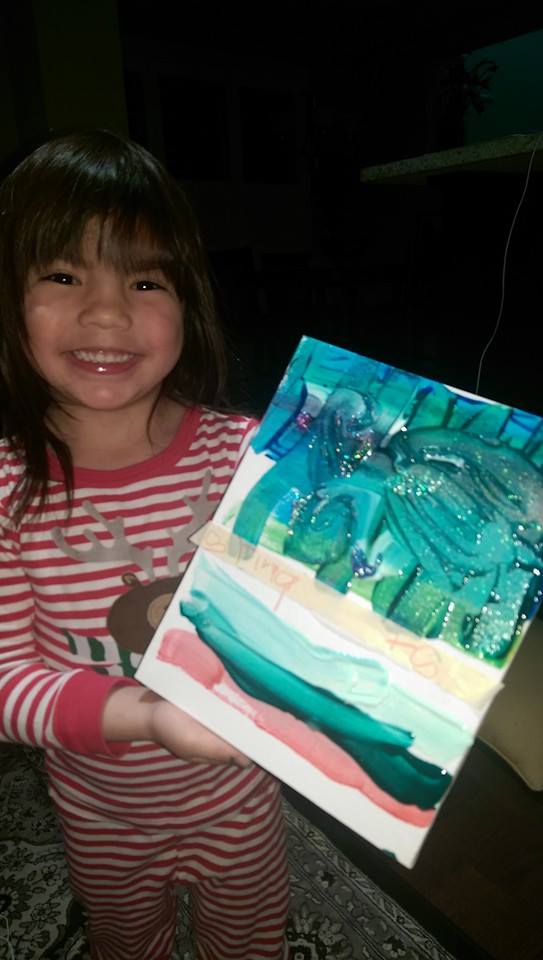
In honour of Family Day I would like to share a story about my family and how my Sylvia Clare (my four year old) is getting along in FDK.  About one week ago, while at home Sylvia Clare decided to paint. This was not unusual as she often paints at home. What was new was her language and ideas about art and herself.  She ushered me to the playroom, took the lead and began to explain that we were going to explore lines.  Lines I thought? So Sylvia Clare understands an element of art?  I sat in silence with what I imagine was a curious look on my face as she continued with confidence: “I’m an artist”.  Those words screamed at me with sheer joy and power. I had never called Sylvia Clare an artist… it was not something I thought of doing, although of course in my heart and mind I believed my child was an artist and a scholar and an athlete and a…..   ”

“Now mommy, you need to wear a smock so your clothes stay clean and roll up your sleeves. Please get the paints”.I followed her instructions.  Next thing I saw was Sylvia Clare carefully dividing the canvas. She began at the bottom and drew careful lines across the canvas using primary colours. Then on the upper part of the canvas she created thick textured, almost bubble like “scribble” where she mixed the colours. The entire time she was talking about her art: “Here mommy I am painting straight lines with primary colours, you see? And up here (top of the canvas) I am trying to see what scribble is like and I added some sparkle”.  She spent a lot of time working on her art and I sat and watched in amazement. Here are some pictures of Sylvia Clare from that day:

sylsmock

sylpaint

paint


Days passed and I wondered how Sylvia Clare was able to develop such clear language about the arts and conceptually understand the elements and most importantly to see herself as an artist. And then, the FDK newsletter came home.  The teachers shared the following in the newsletter:

The students have also been learning about a modern artist names Piet Mondrian from the Netherlands, who used primary coloured shapes and black lines to create famous pieces. They have used his method to create their own line designs. We have also experimented with bubble wrap. Some of the children are referring to themselves as “artists” now…

How one perceives oneself is often how one becomes. Sylvia Clare sees herself as an artist. She can talk about the arts and she confidently engages in art work.  So, on Family Day today I am certain we will be back in the playroom painting and playing and reading and doing… and I am sure that I will be the one who will learn the most.

Happy Family Day!

Guest Blog: Monica McGlynn-Stewart

Hungry Caterpillar

Dual Language Texts

In my (Monica) preservice ECE class this week I had the most amazing experience. The Monica McGlynn-Stewartclass had been given the task of finding a dual language picture book for young children that was inviting and enticing and would support the language and literacy learning of children whose home language was not English. My students were encouraged to choose books that represented their own home languages. We have a wonderfully diverse class and they took up the challenge with enthusiasm. If they couldn’t find a dual language picture book in their home language, they translated a text and added it alongside the English text. For those (like me!) who only speak English, they were encouraged to choose a text that represented the language of children in their placement. They needed to develop six pedagogical strategies that they would employ when using the book with young children. I gave them a fabulous article by Gillanders and Castro (2011) the journal Young Children entitled “Storybook Reading for Young Dual Language Learners” as inspiration.

http://www.naeyc.org/files/yc/file/201101/GillandersR_Online0111.pdf

On Tuesday, they came with their picture books and their strategies, eager to begin. In small groups they took turns sharing their books, props they had made, teaching each other words in other languages, and practicing their strategies such as doing a “picture walk” through the text and pre-teaching key words or phrases that the children could chime in with during the reading. I had never seen the class so alive and so engaged. There were a dozen languages in the air. My students who were English Language Learners themselves, who were generally quiet and shy, were confidently sharing their expertise in their home languages. What I learned was the use of dual language texts can benefit not only young learners, but can also be an opportunity for dual language preservice students to value their home languages as a rich resource that they bring to their teaching.


Creating an Audit Trail

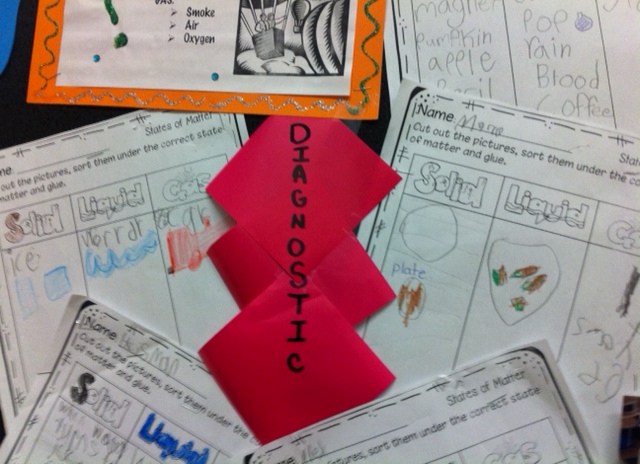
During one of my final practicum visits, I (Cathy) was excited to see one of my student teachers had created an audit trail.   When I mentioned this to her, she replied, “I thought  it was just a bulletin board.” But it was far more than ‘just a bulletin board’.   The student work Melissa had beautifully displayed represented an entire science unit of learning from pre-diagnosis to final summaries.

Audit trails were popularized by Dr. Vivian Vasquez, in her ground breaking critical literacy work with 3-5 year olds.  Vasquez says,                                                                                                             An audit trail or learning wall, as my three to five year old students called it, is a public display of artifacts gathered together by a teacher and their students that represents their thinking about different issues and topics.  This strategy is useful for creating spaces for students to re-visit, reread, analyze, and re-imagine various topics or issues. It is also a powerful tool for connecting past projects or areas of study to newer projects or areas of study. Further, it can be used as a tool for building curriculum as it visibly lays out the journey of the group’s thinking and learning over a period of time.

http://hwcdn.libsyn.com/p/c/f/3/cf355fe54466c4e0/Audit_Trail.pdf?c_id=4270455&expiration=1418946485&hwt=2cc91c9a05310c5ca082ae4a61c9c725

more walldiagnostic molecules

Inspiration: A compulsory component of being a teacher

I (Yiola) think about education… the endless complexities and barriers to just getting to good teaching and the kind of learning that leaves children feeling alive, fulfilled and competent.  What makes good teaching such a challenge? Government cuts, a culture of standardization, and a lack of appreciation for developing what I will call the tools of inspiration (the Arts, creative thinking, inquiry) are just a few of the challenges at the forefront of my thinking lately.

I believe most teachers begin their careers filled with excitement and determination to “make a difference”. However, without support and nourishment for inspirational teaching, teachers burn out. If teachers burn out, there is little hope for inspirational student learning.

An interesting link below talks about the need for teacher support. Let me ask you, what do you think teachers need in order for them to be, not only competent, but inspirational, creative, and “house on fire” kinds of educators?

http://www.creativitypost.com/education/apathetic_uncooperative_coals_wont_burn